
Are Heritage Sites Wheelchair Accessible?
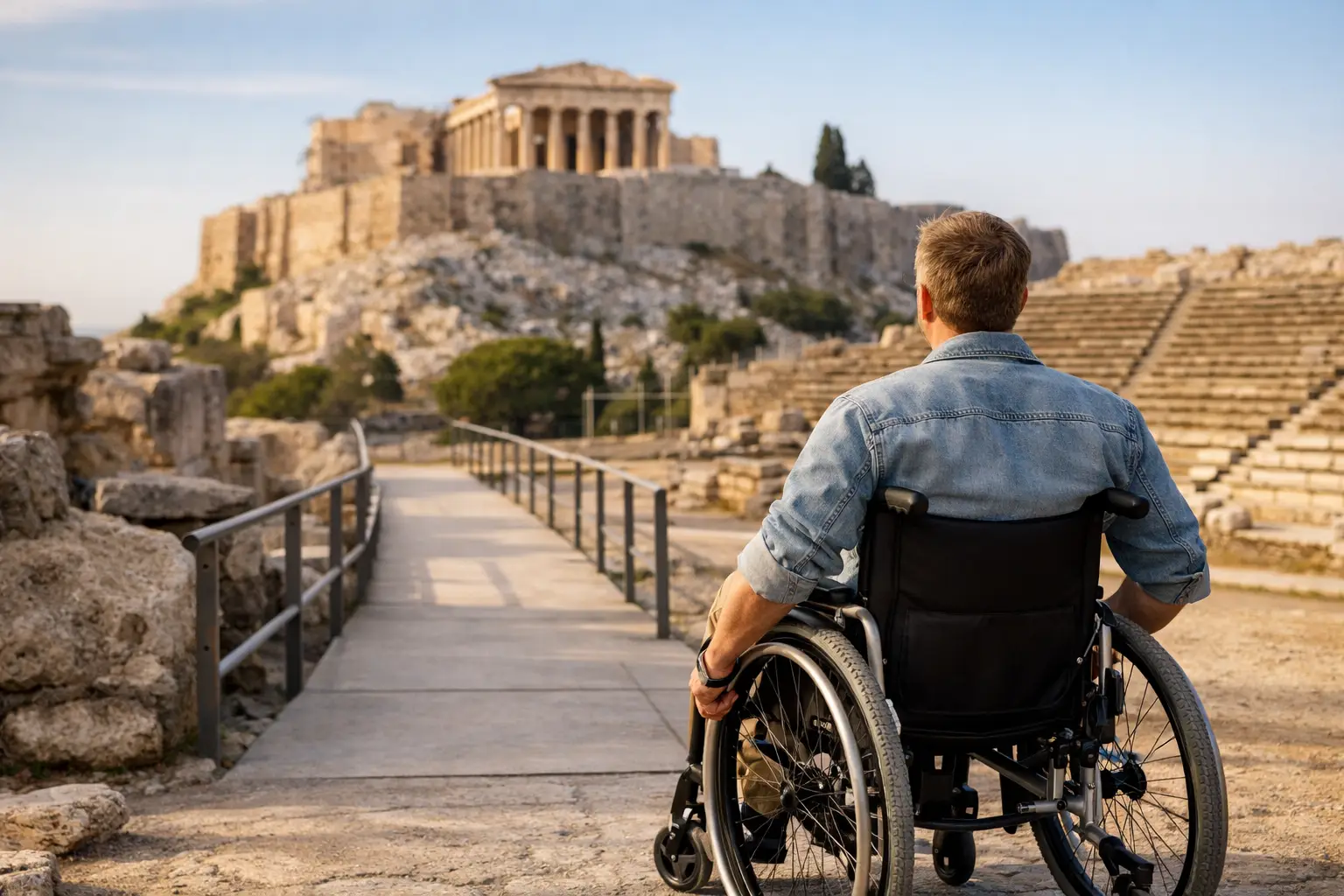
You can arrive at a grand castle, Roman ruin or stately home and find the website says “accessible” - only to discover the route includes loose gravel, steep inclines and a so-called accessible toilet tucked behind a heavy manual door. So, are heritage sites wheelchair accessible? Sometimes yes, sometimes partly, and sometimes only in the marketing copy. For wheelchair users and mobility scooter users, the real answer nearly always sits in the detail.
Are heritage sites wheelchair accessible in practice?
Heritage sites are some of the hardest places to assess from a distance because access is often shaped by the very thing people are coming to see - age, original construction and protected status. A modern museum can usually add lifts, level entrances and automatic doors without too much fuss. A medieval fortress built on a hill, or a historic manor with narrow internal thresholds, is a different job entirely.
That does not mean heritage sites are automatically off limits. Plenty have made real improvements. You will find step-free visitor centres, accessible parking, adapted toilets, loan wheelchairs, buggy services, platform lifts and alternative routes that still let you experience the site properly. But “improved” is not the same as fully accessible, and that distinction matters when you are planning a day out that depends on reliable access.
In practical terms, heritage access usually falls into three broad categories. Some sites are genuinely good for wheelchair users, with step-free routes to key areas and decent facilities. Some are manageable with planning and a bit of compromise. Others may offer very limited access, where you can use the café, shop or grounds but not the main historic spaces themselves.
Why heritage accessibility is rarely straightforward
The biggest issue is terrain. Even if the entrance is step-free, heritage grounds often include cobbles, compacted earth, gravel, uneven flagstones and long slopes. Manual wheelchair users may need assistance, and scooter users may find that battery range, ground clearance and stability become real considerations, especially in wet weather.
Then there is the layout. Heritage properties were not built with turning circles in mind. Doorways can be narrow, internal rooms can be tight, and upper floors may only be reachable by stairs. Some sites install lifts where possible, but listed building restrictions can limit what changes are allowed.
Distance is another factor that gets overlooked. A site may technically be accessible from the car park to the entrance, but if that route is half a mile uphill, the access claim starts to look a bit flimsy. The same goes for sites where the accessible route is much longer than the standard visitor route.
Toilets, seating and shelter also matter more than operators sometimes realise. A heritage site can feel manageable for the first twenty minutes and exhausting after ninety. If there are not enough places to rest, if the accessible loo is out of service, or if there is no shelter when the weather turns, the experience changes quickly.
What to check before you book or set off
The best approach is to treat every heritage site as a research job. That sounds cautious, but it saves wasted journeys and unpleasant surprises.
Start with the access information, but do not stop at the word “accessible”. Look for specifics. Is there step-free entry from the car park? Are pathways paved, compacted or loose? Are there steep gradients? Is the full site accessible or only selected sections? Are there lifts, and if so, what are the size and weight limits? If you use a larger powered wheelchair or scooter, measurements matter.
Photos can tell you a lot. If the site has images of entrances, paths, toilets and internal spaces, use them. Visitor videos can also be more revealing than polished attraction photography because they show what the ground really looks like.
If the published information is vague, ring or email and ask direct questions. Plain, practical questions usually get better answers. Ask whether a mobility scooter can use the main route. Ask whether there are cobbles or gravel. Ask if there are dropped kerbs, accessible toilets, seating points and accessible parking close to the entrance. Ask whether staff can provide a map of step-free routes.
It is also worth checking transport and arrival. A well-adapted site is less useful if the nearest station has no step-free access or the car park surface is a muddy field. Accessibility starts before the ticket desk.
The difference between wheelchair accessible and scooter friendly
This is where many heritage sites still fall short in their information. They may say they are wheelchair accessible, but that does not always mean they are suitable for mobility scooters.
A narrow lift or a tight historic doorway might work for a manual chair and not for a larger powered chair or scooter. Some sites allow only certain scooter sizes indoors. Others offer manual wheelchairs on site but cannot accommodate heavier personal equipment in older buildings.
For scooter users, gradients, route length and turning space are often the deciding factors. A route can be technically step-free but still awkward if it involves sharp bends, rough surfaces or pinch points through gates and archways. If you travel with a larger Class 3 scooter, you need to be even more careful. Not every “accessible” route is built for that footprint.
Where heritage sites usually get it right
The better heritage attractions understand that access is not one feature. It is the whole visitor journey. They provide proper pre-visit information, not vague promises. They make parking straightforward. They keep the route from arrival to entrance smooth and clearly marked. Their staff know the accessible paths and do not look baffled when asked where the lift is.
Good sites also offer realistic alternatives where full access is impossible. That might mean virtual displays for upper floors, accessible interpretation in ground-floor rooms, shuttle vehicles across large estates, or viewing platforms that still give you a proper sense of the place. That is not the same as equal access in every case, but it is far better than leaving disabled visitors to figure things out alone.
Staff attitude matters too. Honest information is far more useful than false reassurance. Most wheelchair users would rather hear, “The west path is very steep and the old tower is not accessible, but the gardens, exhibition and café are step-free,” than turn up to find the reality has been softened.
Common problem areas to watch for
Historic charm has a habit of becoming a practical nuisance when you are rolling over it. Cobblestones look lovely and can be deeply uncomfortable. Gravel can range from firm and manageable to wheel-trapping nonsense. Grass can be fine in dry weather and a complete mess after rain.
Heavy doors are another regular issue, especially on toilet facilities and older entrances. You may also find threshold lips, cramped gift shops, poor signage to lifts, and accessible routes that depend on finding a member of staff with a key.
Some sites also split access in a way that affects the overall day. You might get into the grounds but not the house, into the visitor centre but not the chapel, or around the lower part of a ruined site but not up to the main viewpoint. None of that means the visit is pointless, but it does mean expectations need to be set properly in advance.
How to plan a better visit
If a heritage site looks promising but not perfect, timing can make a big difference. Dry weather can improve ground conditions. Quieter times can make narrow routes and internal spaces easier to manage. If staff assistance is needed for lifts or alternate entrances, arriving when the site is less busy often makes that smoother.
It also helps to think about stamina, not just access. A large heritage estate can be tiring even when step-free. Check whether there are benches, cafés or indoor rest areas. If you are travelling with a companion, agree in advance what level of compromise works for both of you. There is a big difference between “some areas are inaccessible but the visit is still worth it” and “most of the key experience is out of reach”.
For families and carers, clear planning reduces stress. If one person needs mobility support and another wants to explore further, look at whether the site layout allows you to split up and rejoin easily.
So, are heritage sites wheelchair accessible?
The honest answer is that many are trying, some are doing a good job, and plenty still have a long way to go. Heritage sites can absolutely be worth visiting as a wheelchair user or mobility scooter user, but they are rarely places where you should rely on broad claims or generic accessibility symbols.
The best results come from checking the route, the terrain, the toilets, the parking and the practical limits of the site before you travel. That may sound like extra work, but it is what protects your independence. Places with real access details usually understand disabled visitors better. Places that cannot answer basic questions often tell you everything you need to know.
History should not be reserved for people who can manage steps, slopes and uneven ground without thinking. Until that gap closes properly, the smartest move is simple - trust specifics, not slogans, and give your time to the places that have clearly made the effort.
0 Comments
Leave a Comment