
Are Accessible Toilets Always Unlocked in the UK?
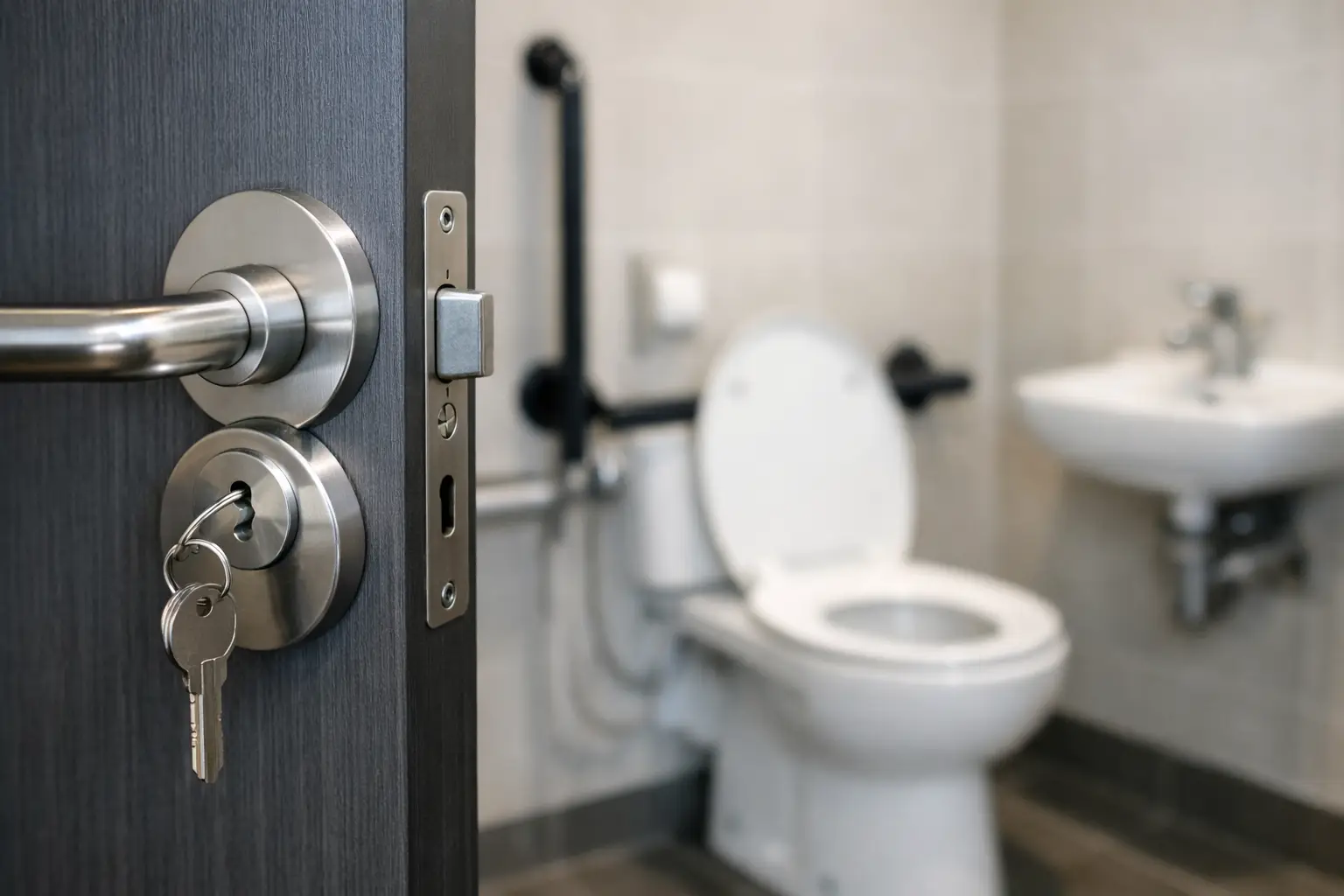
You have planned the route, checked step-free access and found a place with an accessible loo listed on its website. Then you arrive, need it urgently, and find a locked door. So, are accessible toilets always unlocked? No. Across the UK, many are locked with a Radar key or another staff-controlled system. That can be sensible for keeping the facility usable, but it is no help if you are caught short without a key or cannot find anyone to assist.
For wheelchair and mobility scooter users, an accessible toilet is not a bonus feature to admire on a floor plan. It can determine how long you can stay out, whether an attraction is workable, and whether a journey feels independent rather than stressful.
Why accessible toilets are often locked
The most common reason is to prevent misuse. A locked accessible toilet is less likely to become a general storage cupboard, changing room, smoking area or a standard public loo that is left in a poor state. Anyone who has found a toilet blocked by a mop bucket, bins or broken equipment will understand why venues try to protect the space.
Many public accessible toilets use the National Key Scheme, commonly known as the Radar key scheme. The same style of key opens thousands of participating toilets in town centres, stations, shopping areas, parks and visitor attractions. The idea is straightforward: people who need the accessible facility can use it without having to locate a member of staff every time.
But it is not a perfect system. Some doors have an entirely different key, a keypad, a staff buzzer or a code that changes. Others are physically open but unavailable because the venue has closed part of the building, removed the key from reception, or simply failed to maintain the toilet. The word “accessible” on a website does not tell you any of that.
Radar keys give you more control
If you regularly travel in the UK, carrying a Radar key is one of the simplest bits of preparation you can make. It is small, inexpensive and worth keeping in the same bag, scooter pouch or chair pack as your phone charger and medication.
A Radar key should open many National Key Scheme toilets, but do not treat it as a guarantee. The lock may be damaged, the toilet may be closed, or the site may use a non-standard system. Even so, having your own key removes one common barrier and means you do not have to explain personal needs to a receptionist just to use the loo.
It is also worth checking that you can use the key comfortably. If grip, reach or hand strength is limited, ask a companion to carry a spare or consider a key holder that makes it easier to handle. A key only supports independence if you can get to the door and operate it safely.
Do not rely on a staff member being nearby
At a hotel, café or attraction, staff may hold the key. This can work well when the building is busy and the team know what they are doing. It is far less useful when reception is on another floor, the café is closing, or the one person with the key has gone on a break.
If a venue says its accessible toilet is staff-accessed, ask a practical question before relying on it: “Where is the key kept, and can I get to it without waiting for someone to come from another part of the building?” The answer matters more than a vague assurance that facilities are available.
At some transport hubs, the accessible loo is behind a locked gate or in a separate waiting room. Find it as soon as you arrive, particularly if you have a connection to make. Trying to locate a toilet five minutes before your train departs is not the moment to discover a lift is out of order or the keyholder is at the far end of the station.
A locked door is not the only accessibility issue
An open toilet can still be unusable. This is where generic accessibility information often lets disabled travellers down. Before putting a venue into your plans, think about the full journey from where you arrive to the toilet and what happens once you are inside.
For a wheelchair or scooter user, the real questions include whether there is level access, whether the doorway is wide enough, whether there is room to turn, and whether bins or cleaning equipment are taking up the transfer space. The side on which the toilet is positioned matters too. A room designed for a left-side transfer will not suit everyone.
You may also need an adult-sized changing bench, ceiling hoist, privacy screen or space for a carer. A standard accessible toilet is not a substitute for a Changing Places toilet. Changing Places facilities are designed for people with more complex care needs, but they are less common and may have restricted opening hours or require staff assistance. Check the operational details, not only whether one appears on a venue map.
For mobility scooter users, consider whether scooters are permitted inside. Some toilets are large enough for a compact scooter, but others are not, and a venue may ask you to leave it outside. If you cannot walk safely for even a few steps, that arrangement is not accessible. Ask in advance rather than assuming the blue wheelchair symbol tells the whole story.
What to check before a day out or a journey
You do not need to ring every café along your route. But for a long travel day, a major attraction, a new city or a venue where you will spend several hours, checking toilet arrangements is sensible planning rather than overthinking.
Start with the venue directly. Ask whether the accessible toilet is open during all public opening hours, whether it uses a Radar key, and whether it is on the same level as the main entrance. If you need specific equipment or a particular transfer side, say so plainly. “Is there an accessible toilet?” is too broad to produce a useful answer.
Then create a back-up. On a day out, identify one alternative accessible toilet nearby, such as a library, museum, shopping centre, railway station or larger supermarket. In busy tourist areas, public toilets may close earlier than the attractions around them. In rural areas, there may be very little between towns. Building that knowledge into your route gives you options if the first facility is shut, occupied or out of order.
Hotels deserve extra attention. Do not assume that a ground-floor accessible bedroom means easy access to a public accessible toilet in the bar, breakfast room or reception area. If you arrive before check-in, or leave after checking out, you may need those facilities. Ask whether they are available at all times and whether the route involves heavy doors, a platform lift or stairs.
What to do if the accessible toilet is locked
First, look for a Radar lock. It is often a circular metal fitting at a practical height on the door. If you have your key, try it. Do not force the lock if it does not turn easily, as some venues use a similar-looking lock that is not part of the scheme.
If you do not have a key, ask staff directly and calmly. You should not have to give a detailed medical explanation. “I need to use the accessible toilet, please. Can you open it now?” is enough. If the staff member seems unsure, ask them to contact a manager rather than accepting a dismissal.
If the toilet is blocked, inaccessible or being used for storage, take a photo if it is safe and appropriate, then raise it with the venue. Be specific about the problem: a locked toilet with no available key, a broken door, equipment stored in the turning space, or a lift preventing access. Clear feedback gives a business a chance to fix the right issue and helps other disabled visitors too.
There are times when the practical answer is to leave and use your back-up location. That is frustrating, particularly when a business has advertised accessibility, but protecting your comfort and dignity comes first. Report it afterwards when you are not under pressure.
Accessible toilets should support independence
Locked accessible toilets are not automatically a sign of poor access. A well-maintained National Key Scheme toilet can be far more reliable than an unlocked room that is constantly misused. The problem is poor communication, unavailable staff, unsuitable layouts and venues that treat the facility as an afterthought.
Carry a Radar key, check the details that affect your own mobility, and always keep a second option in mind when you travel. That small amount of planning can turn an awkward unknown into one less barrier between you and a good day out.
0 Comments
Leave a Comment