
Are Accessible Rooms Really Accessible?
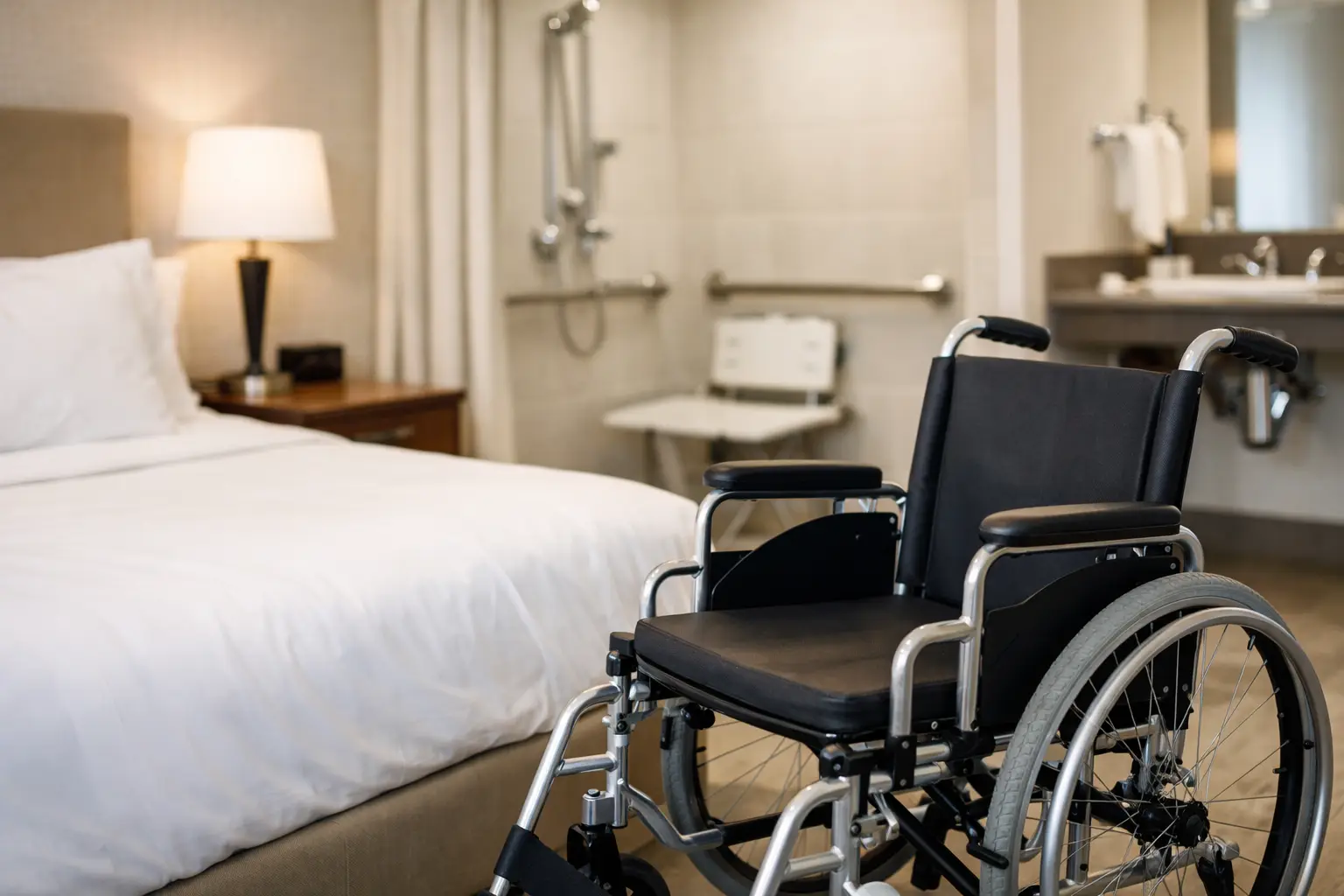
You arrive after a long journey, check in, open the door to your so-called accessible room and realise the bathroom door is too tight, the bed is too high and the shower has a lip on it. That is usually the moment the question lands properly - are accessible rooms really accessible?
The uncomfortable answer is that some are, some are not, and the label on the booking page tells you very little on its own. For wheelchair users, mobility scooter users and anyone travelling with reduced mobility, an accessible room can mean the difference between a relaxing break and a stressful, exhausting stay. The problem is that hotels often treat accessibility as a category, when in reality it is a long list of practical details that either work or do not.
Why accessible rooms vary so much
A lot of confusion starts with the fact that hotels use the same term for very different rooms. One property may have a genuinely well-designed room with level access, a proper wet room, space to turn, lowered fittings and sensible bed height. Another may simply offer a standard room with grab rails in the bathroom and call it accessible.
That gap exists because accessibility standards are interpreted differently, especially across countries, hotel groups and older buildings. A modern city hotel built with disabled guests in mind is often very different from a converted country house, a budget hotel with limited room layouts or a seaside property that has tried to retrofit access into a building that was never designed for it.
Staff are not always given detailed training either. When you ring up and ask if a room is wheelchair accessible, the person on the phone may genuinely think it is because there is a lift, a wider doorway or a shower seat. They may never have measured the bathroom entrance, checked the turning space or considered what happens if you transfer from the left rather than the right.
Are accessible rooms really accessible for wheelchair users?
For many wheelchair users, the honest answer is only sometimes. A room can tick one box and fail badly on three others. That is why broad claims are not enough.
The bathroom is usually where things fall apart first. Hotels love the phrase wet room, but that can still mean a shower area that floods the whole floor, a fixed shower chair in the wrong position or a toilet that cannot be approached safely. If you need room for a side transfer, a grab rail in the wrong place is not a minor issue. It makes the room unusable.
Bed height is another common problem. If the bed is too low, some travellers cannot transfer independently. If it is too high, the same issue applies. Hotels often overlook this because a bed is just a bed to them, but for disabled travellers it is a key part of whether the room works at all.
Then there is manoeuvring space. A room can have a wide door but still be too cramped once luggage is in place, furniture is fixed, and the route to the bathroom narrows at the wrong point. Mobility scooter users face an extra layer of trouble here because a hotel may describe a room as accessible while assuming guests use manual chairs or can transfer and leave equipment elsewhere.
The biggest mistakes hotels make
The most common mistake is thinking accessibility starts and ends at the bedroom door. In reality, the whole route matters. If there is a heavy entrance door, a steep ramp, a tiny lift or a step into the restaurant, the room itself becomes only part of the story.
Another regular issue is vague wording. Terms such as adapted, disabled friendly and suitable for reduced mobility are used far too loosely. They sound reassuring, but they tell you almost nothing. You need dimensions, layout details and clear answers.
Photos are often unhelpful as well. Hotels tend to show a corner of the bedroom, a stylish sink or a shower seat folded against the wall. What they rarely show is the approach to the toilet, the threshold into the bathroom, the space beside the bed or the route from the car park.
Older hotels can be particularly hit and miss. Some do a solid job within the limits of the building. Others rely on good intentions and a few added rails. If you need reliable independent access, good intentions are not enough.
What to ask before you book
If you want to avoid turning up to the wrong room, you need to ask direct questions and avoid letting the conversation stay general. Do not settle for yes, it is accessible. Ask what that actually means.
Start with the basics. Is there step-free access from the pavement or car park to reception, to the lift and to the room itself? If there is a lift, ask for its internal dimensions, not just whether one exists. If you use a mobility scooter, check whether it can fit and whether there is charging space in the room.
Then ask about the room layout. Measure your own chair or scooter and compare it to the doorway widths. Find out the bed height from floor to top of mattress. Ask whether there is space on both sides of the bed and whether furniture can be moved.
The bathroom needs the most attention. Ask whether it is a true level-access shower or whether there is a lip. Check where the grab rails are placed and whether the shower seat is fixed or movable. Ask for the distance from the toilet to the nearest wall and whether there is enough room for your preferred transfer side.
If the hotel seems unsure, ask them to physically go and check. There is nothing rude about that. You are not being difficult. You are trying to establish whether you can use the room safely and with dignity.
What good accessible rooms usually have in common
The best accessible rooms are not always the most expensive or the newest. What they tend to share is that somebody has thought through how the space is actually used.
That means step-free routes that are genuinely step-free, not step-free apart from one awkward threshold. It means enough floor space to turn without performing a three-point manoeuvre. It means a shower you can enter properly, a toilet you can approach properly and a bed that allows an independent transfer.
Good rooms also tend to be honest in how they are described. When a hotel can give exact measurements, clear photos and sensible answers, that is usually a good sign. It shows they understand that disabled guests are not asking for favours. They are asking for usable information.
This is where lived experience matters. Advice from disabled travellers often picks up details that hotel websites miss completely, such as whether the slope to reception is manageable in wet weather, whether the dining room tables allow wheelchair access, or whether the accessible room is miles from everything else.
Why one accessible room will not suit everyone
This is the bit many non-disabled people miss. There is no single version of accessible that works for all guests. A room that suits one wheelchair user may be wrong for another. A mobility scooter user may need charging space and larger turning areas. Someone with limited walking ability might want grab rails and a walk-in shower but not need wide transfer space beside the toilet. A traveller with a hoist has another set of requirements altogether.
That is why blanket statements are so frustrating. Accessibility is not yes or no. It is about fit.
The more complex your access needs, the more careful you need to be with hotel claims. Even large chains can be inconsistent between properties. One branch may understand disabled guests brilliantly. Another may have copied the same wording onto a room that is only partly adapted.
A better way to judge hotel accessibility
Treat accessible room listings as a starting point, not proof. Use the label to narrow your search, then verify everything that matters to you. If the hotel cannot answer simple access questions, take that as useful information in itself.
It also helps to build your own checklist from previous trips. Every time a room works well or badly, note why. Over time, you will get much clearer on your non-negotiables. For some people it is bed height. For others it is a proper wet room, space to park a scooter indoors or reliable step-free access throughout the building.
That approach makes future booking calls easier because you are not asking whether the room is accessible in general. You are asking whether it works for you.
For readers of Andy Wright Travel, that is really the heart of it. Independent travel gets easier when you stop relying on broad promises and start pinning hotels down on the details that affect your day.
So, are accessible rooms really accessible? Sometimes yes. Too often, not enough. But the more specific you are before booking, the less likely you are to be caught out after arrival. And when a hotel gets it right, it is worth remembering and worth supporting, because good access should not feel like a lucky find.
0 Comments
Leave a Comment