
Airport Security With a Wheelchair Explained
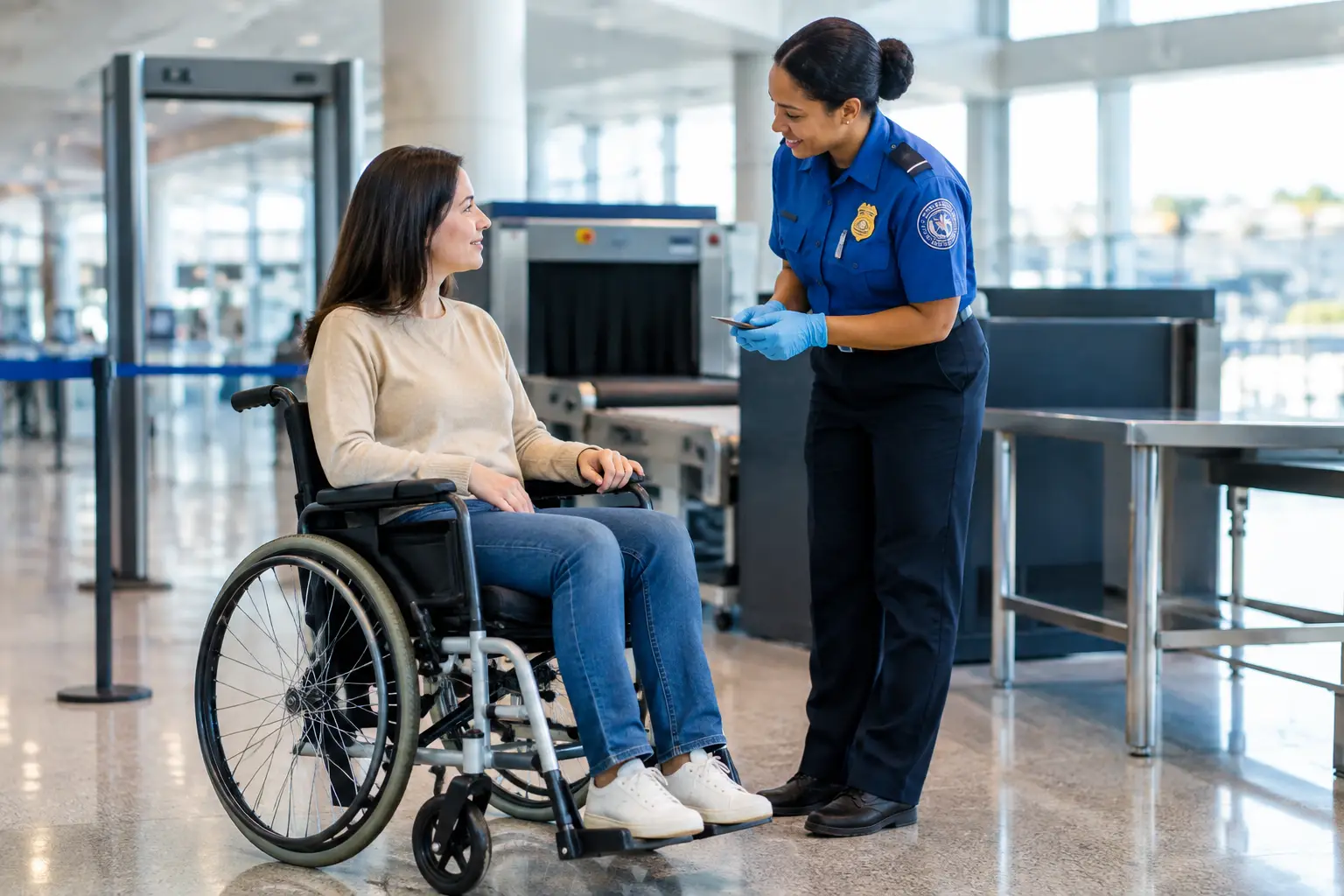
The difficult part of airport security with wheelchair use is rarely the metal detector itself. It is the uncertainty: whether staff will understand your chair, whether you will be separated from it, and whether a rushed search will leave you feeling exposed or delayed. A little preparation changes the experience completely.
You have a right to be screened with dignity and to ask for assistance that works for you. The process can vary between UK airports and overseas, but the basics are broadly the same. Security needs to check both you and your mobility equipment. That does not mean you need to stand, walk through a scanner, or accept handling that feels unsafe.
Arrange assistance before you get to security
Book Special Assistance with your airline or travel agent as soon as possible, ideally when you book. In the UK, airports normally ask for at least 48 hours' notice. Be clear about what you actually need. Saying you need a wheelchair is useful, but saying that you can remain in your own manual chair until the aircraft door, or that you use a powered chair and cannot transfer independently, is far more helpful.
At check-in or the assistance desk, confirm that you want to stay in your own wheelchair for as long as possible. If you are travelling with a mobility scooter, expect it to be taken for loading before boarding rather than at the aircraft door. That is one reason a manual airport wheelchair or a planned transfer can be worth discussing in advance.
Allow extra time. Not because disabled travellers should have to arrive at the crack of dawn, but because an unhurried security search is much better than being pushed towards a gate while staff try to find a private screening area. For a short-haul flight, aim to be at the airport around three hours before departure unless your airline advises otherwise. Long-haul travel may need more.
What happens at airport security with a wheelchair?
Tell the security officer straight away that you use a wheelchair and whether you can stand or transfer. Do not attempt to get up simply because the queue is moving. If you cannot walk through the standard scanner, you will normally be screened while seated or using a hand-held detector, followed by a physical search if required.
Your wheelchair will also need checking. Staff may swab the frame, wheels, controls, bags and cushions for explosive trace detection. They may inspect parts of the chair by hand. A manual wheelchair may be folded or moved only if it is safe to do so, while powered wheelchairs are usually checked in place.
A pat-down can feel personal, particularly when you are seated and cannot easily reposition yourself. You can ask what will happen before it starts. You can also request a private search and, where possible, an officer of a particular gender. If you travel with a partner, carer or companion, ask if they can stay with you. Policies differ, but it is always worth asking.
Be direct about pain, spasms, limited movement, catheters, stomas, braces or any area that cannot be touched or moved without care. You do not need to give your life story. A simple instruction such as, “I cannot raise this arm” or “Please do not lift me from the chair” gives staff the information they need.
You do not have to be separated from your chair unnecessarily
Your wheelchair is not just a seat. It may be how you maintain balance, manage pain, communicate, or stay independent. Make that clear if staff suggest a transfer which is not safe for you.
There are situations where a transfer is necessary, especially if equipment needs a closer inspection or the airport uses a particular screening process. But the answer should be a safe alternative, not pressure to stand. Ask for a supervisor if you do not understand why a transfer is needed or if you feel your needs are being brushed aside.
Keep any essentials that cannot be lost in a small bag on your lap or with your travelling companion. This includes medication, phone, passport, charging cable, medical paperwork and a drink if you can carry one through after security. Loose items on the back of a chair can slow the check down, so organising them before you reach the belt helps.
Prepare the chair as well as yourself
A few minutes of preparation can prevent the most common hold-ups. Remove loose shopping bags, umbrellas and anything that might look odd on an X-ray or fall off while the chair is inspected. If your wheelchair has removable cushions, side guards or a detachable control, know what can safely come off and what should stay in place.
For a powered wheelchair, carry the manufacturer's battery information and a note of the battery type. Security staff are not always the same people who approve the chair for carriage, but questions about batteries often appear at the same point in the journey. Lithium batteries, wet-cell batteries and dry batteries have different airline rules. Get written confirmation from the airline before travel, particularly if the chair is a larger powered model.
Take photographs of your chair before leaving home, including the joystick, seating, footplates and any existing marks. This is mainly for the flight, not security, but it is good practice whenever your equipment will be handled by others. If there are specific lifting points, freewheel instructions or a control that must not be knocked, attach a clear label and keep another copy with you.
A short card can be useful when travelling abroad. Write down how to operate the chair, how it should be lifted, its weight, battery type and any instruction such as “do not lay on side”. Keep the wording plain. Airport staff want practical information quickly.
Make screening less stressful on the day
The best approach is calm and firm. Explain what you need before anyone starts moving equipment. Most staff want to help, but they may not know your chair or your body. Waiting until something has gone wrong is harder for everyone.
If standing is possible but difficult, decide before the journey whether you are willing to transfer for screening. Do not let a bad day, pain flare-up or fatigue force you into a choice you would not normally make. Your ability can change from one trip to the next, and that is completely valid.
Wear clothing that makes access easier without sacrificing your comfort. Layers, lots of metal jewellery, heavy boots and bulging pockets can create extra checks. There is no need to dress as though you are going through an obstacle course, but simple clothing and easily reachable medication save time.
If you use liquid medication, nutritional drinks, gel packs or medical supplies that exceed the usual liquid limit, declare them before screening. Keep them together and, if possible, carry a prescription label or letter from a clinician. They may still need to be tested, so build in time rather than assuming you can wave them through.
If the process goes wrong
Occasionally, airport security is handled badly. A chair may be treated roughly, staff may speak to your companion instead of you, or a request for privacy may be ignored. Deal with the immediate issue first: ask for a supervisor, explain the safety concern and make sure you are not left without your mobility equipment.
Write down names, times, the security lane and what happened once you are through. Photographs of any damage and a note made while it is fresh are far more useful than trying to remember it after a holiday. You can raise a complaint with the airport and, if the issue relates to assistance booked through the airline, with the airline as well.
Do not let one poor experience convince you that flying is off limits. Airports are busy, imperfect places, and accessibility standards are not equally good everywhere. But knowing your rights, communicating clearly and protecting the equipment you rely on puts far more control back in your hands. The goal is not to make yourself less of a problem for the airport. It is to get through security safely, with your dignity intact, and get on with the trip you planned.
0 Comments
Leave a Comment