
Accessible Travel Trends That Matter Now
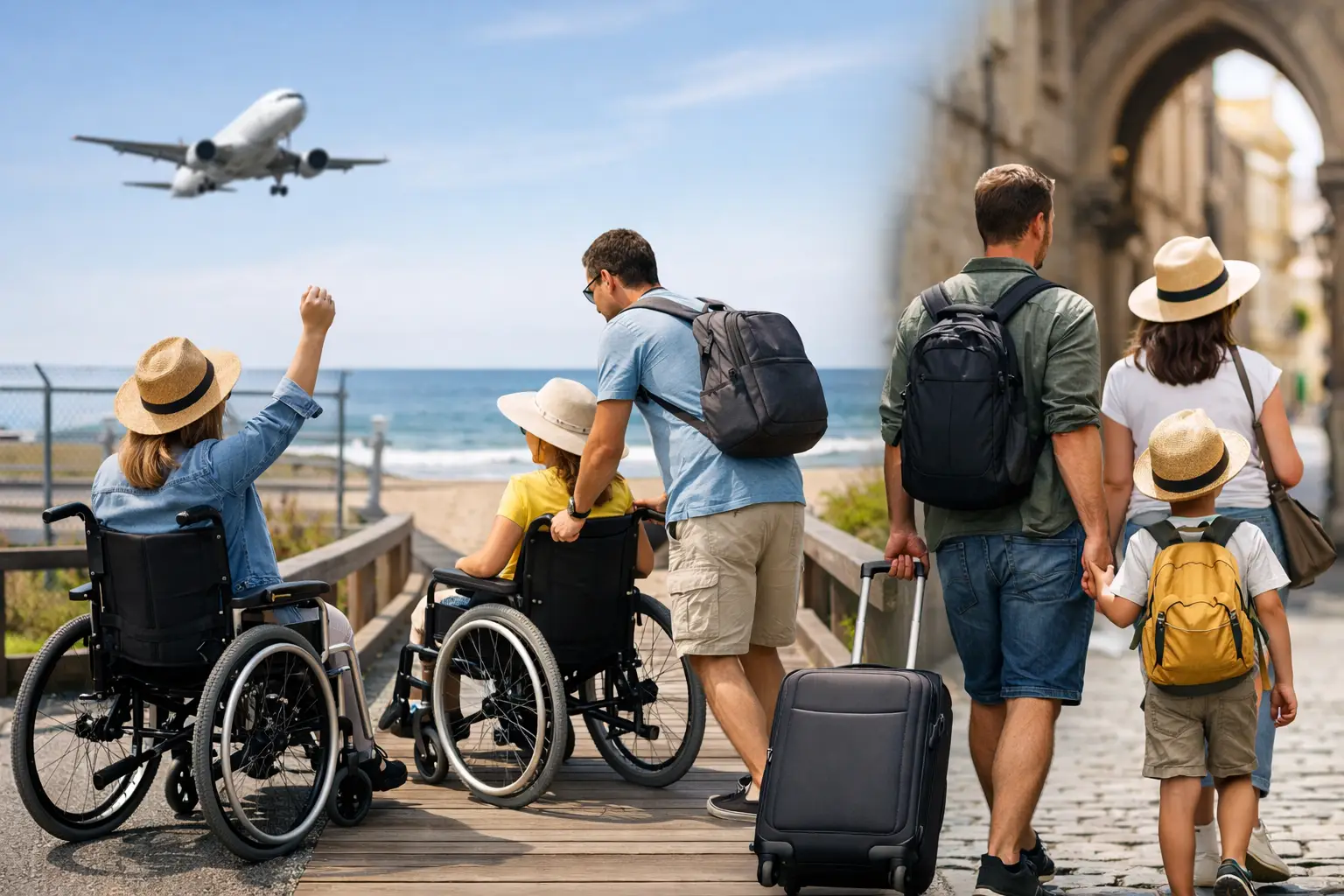
A hotel can advertise an accessible room, an airline can promise assistance, and a tourist board can say a destination is inclusive - then you arrive and find a steep kerb, a bathroom door too narrow for your chair, or a so-called step-free route that ends at a broken lift. That is why accessible travel trends matter. For wheelchair users, mobility scooter users, carers and families, trends are not just industry chatter. They shape whether a trip feels possible, stressful or genuinely freeing.
What is changing now is not only the amount of accessibility information available, but the kind of information travellers are demanding. The old model of vague promises and one-line accessibility statements is being challenged by people who need proper detail before they spend money.
Accessible travel trends are becoming more practical
One of the biggest shifts is that disabled travellers are no longer satisfied with labels alone. Words like accessible, adapted and suitable mean very little on their own. People want measurements, photos, route details and honest explanation.
That is a positive change. A hotel saying it has an accessible room is not enough if the turning circle is tight, the shower has a lip, or the bed height makes transfers awkward. The same goes for attractions, beaches, train stations and city streets. The trend is towards usable specifics rather than marketing language.
For travellers with mobility scooters, this matters even more because access is often more complicated than a simple yes or no. A venue might work well for a manual wheelchair but be awkward for a larger scooter. A pavement might be technically step-free but still impossible because of camber, loose surfaces or street clutter. Better accessibility content is slowly moving towards these real operational details.
First-hand reviews are carrying more weight
Another of the most useful accessible travel trends is the rise of lived-experience reporting. Disabled travellers increasingly trust reviews written by people who actually use wheelchairs or scooters, rather than generic destination round-ups.
That trust has to be earned. Real-world reporting tends to cover the details that matter on the day: whether a transfer vehicle had a proper ramp, whether a ferry crew handled boarding sensibly, whether there was enough room to pass through breakfast service without playing bumper cars with the furniture. Those details rarely appear in standard travel copy, but they can decide whether a trip runs smoothly.
This is where specialist publishers such as Andy Wright Travel have a clear advantage over mainstream travel sites. Experience changes what you notice. If you travel with mobility equipment yourself, you automatically look for dropped kerbs, charging practicalities, gradients, boarding processes and whether an accessible loo is actually unlocked and usable. That is the sort of information people need before they commit.
Video is becoming part of trip planning
Written guides still matter, but video walkthroughs are now a major part of accessible trip research. That trend makes complete sense. A two-minute look at a hotel entrance, bathroom layout or promenade surface can tell you more than a glossy brochure ever will.
For many disabled travellers, video reduces guesswork. You can judge widths, see flooring, check how busy an area gets and understand the route from the street to reception. It is not perfect, because camera angles can mislead and not every practical issue is visible on screen, but it helps people make better decisions.
This also puts pressure on travel businesses. Once travellers get used to detailed access videos, bland claims become easier to challenge. The gap between what is advertised and what is actually there becomes obvious much more quickly.
Transport is improving, but unevenly
Transport remains one of the biggest barriers, and one of the clearest areas where accessible travel trends are mixed. There has been progress. More airports are familiar with mobility assistance, more cruise operators are paying attention to adapted cabins, and some rail networks are improving step-free access.
But the reality is still inconsistent. A route may work brilliantly in one city and be a headache in the next. An airline may handle your chair well on one leg and badly on the return. A station may be listed as accessible while relying on a lift that is out of service half the week.
That is the trade-off travellers still face. The trend is positive in the broad sense, but access remains fragile because it often depends on maintenance, staff awareness and whether systems join up properly. A smooth journey is not created by one accessible bus or one platform lift. It depends on the full chain working from start to finish.
Destinations are competing on real access
Tourism boards and destinations are starting to realise that accessibility is not a niche extra. It is a serious travel market, and it includes not only disabled travellers but also partners, families, friends and older visitors who spend money and stay longer when a place is easy to navigate.
The better destinations are not just adding a paragraph to a website. They are looking at beach matting, accessible toilets near major attractions, adapted transport, smoother promenade routes and clearer information at street level. Where this works well, the difference is immediate. A destination becomes less exhausting because you are not constantly solving avoidable problems.
Still, there is a gap between places investing in infrastructure and places simply promoting themselves as inclusive. That is why destination-level accessibility claims should always be checked against current traveller reports. A city can have an accessible museum quarter and still have dreadful pavements two streets away.
Accommodation standards are slowly getting sharper
Hotels and holiday flats are under more pressure to describe accessibility properly. That is one of the more encouraging accessible travel trends, although progress is patchy.
The best providers now understand that disabled guests need clarity on doorway widths, wet room design, bed access, hoists, pool lifts and parking distance. They are also becoming more aware that one adapted room does not suit everyone. Some guests need roll-in showers. Others need profiling beds, ceiling hoists or enough space for a larger powered chair.
The problem is that many listings still use tick-box accessibility. That leads to expensive mistakes. Before booking, practical travellers are increasingly asking for current photos, exact measurements and confirmation that nothing has changed since the room was last reviewed. That extra effort can save a ruined break.
Technology helps, but it does not replace common sense
Apps, online maps and accessibility filters are getting better. They can help identify step-free stations, adapted loos, route gradients and nearby parking. That is useful, especially in unfamiliar destinations.
But technology is only as good as the data behind it. An accessible entrance can be blocked by bins. A lift shown as available can be broken. A route marked step-free can still be miserable because of cobbles or steep slopes. The current trend is towards smarter planning tools, but they are best used as a starting point, not the final answer.
That is why a layered approach works best. Use the tech, read first-hand reviews, watch video if available, and ask direct questions. If a business gives vague answers or avoids specifics, treat that as useful information in itself.
Independence is the real trend underneath all of this
The biggest shift is not just better kit, better data or better hotel pages. It is that disabled travellers are setting the standard for what useful travel information looks like. The conversation has moved from Can we travel? to What do we need to know to travel well?
That is a stronger position. It puts independence at the centre rather than gratitude for the bare minimum. It also recognises that accessibility is not about being looked after in a patronising way. It is about having enough accurate information and workable infrastructure to make your own decisions with confidence.
For wheelchair and mobility scooter users, that confidence changes everything. It opens up bigger trips, not just safer ones. People become more willing to try long-haul flights, city breaks, cruises, beaches and rail journeys when they can see how the practical side will work.
The travel industry still has a long way to go. Broken lifts, poor staff training, misleading room descriptions and inaccessible streets are not disappearing overnight. But the direction of travel is better than it was, largely because disabled travellers have stopped accepting fuzzy information and low standards.
If you are planning your next trip, pay attention to the trends that improve real decision-making: detailed reviews, video evidence, proper transport information and honest accommodation checks. Those are the changes that make travel more achievable in practice, not just on paper. And when you find businesses and destinations getting it right, remember them - because every well-planned journey helps prove that access is not a favour, it is part of the trip.
0 Comments
Leave a Comment