
Accessible Transport That Actually Works
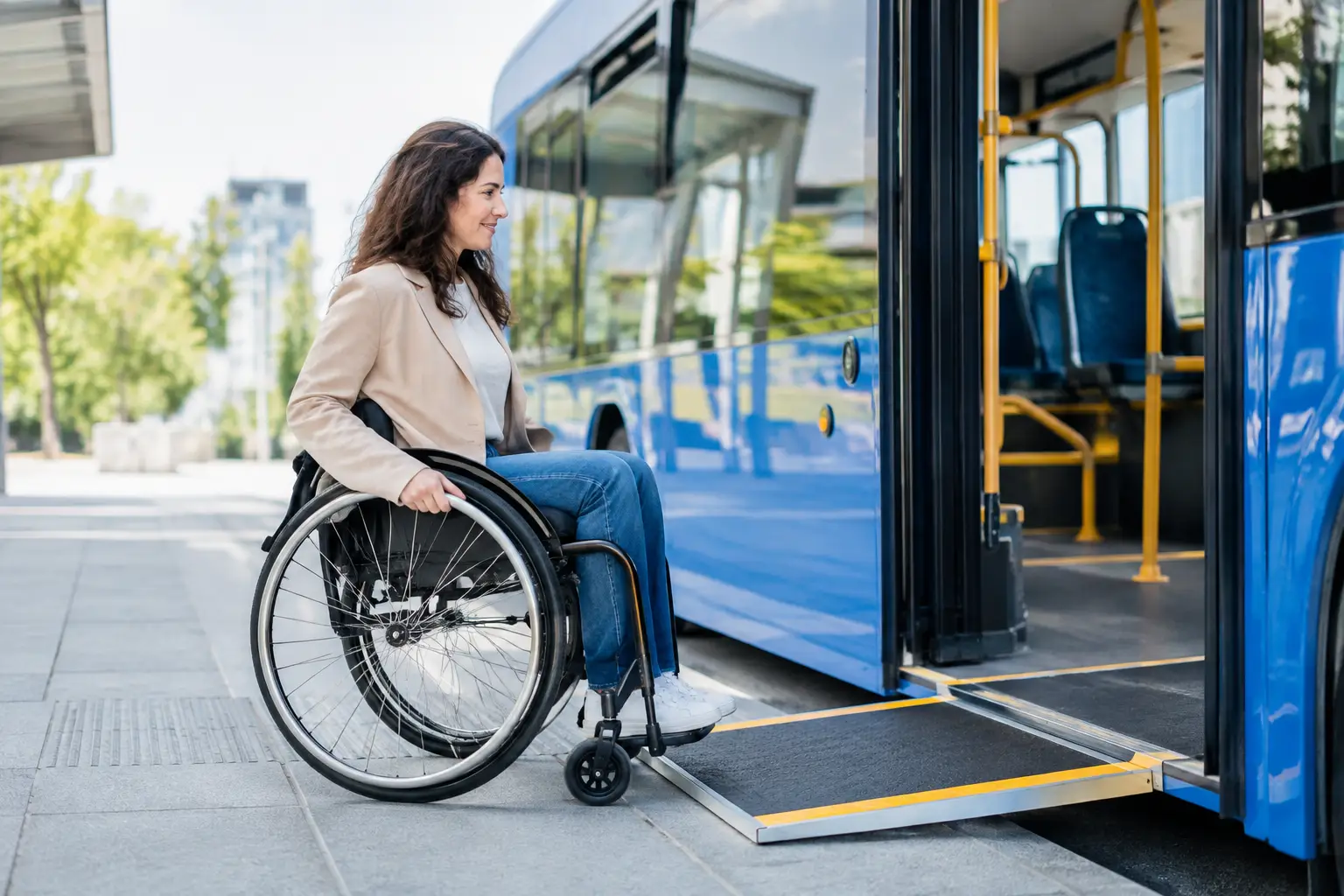
The journey can go wrong long before you reach the airport. A train may have a ramp but no staff booked to meet you. A taxi firm may say it is accessible without asking what size scooter you use. Accessible transport is not a tick-box feature - it is a chain of practical details that must work together.
For wheelchair and mobility scooter users, transport planning is often the difference between a proper holiday and being stuck at the hotel. The good news is that independent travel is entirely possible. The less good news is that it takes more than trusting an accessibility symbol on a booking page.
Accessible transport starts with the right questions
The first question is not, “Is it accessible?” That word means different things to different operators. Ask whether you can remain in your wheelchair during the journey, whether your scooter must be folded or placed in a hold, what the maximum permitted weight and dimensions are, and whether staff assistance must be booked in advance.
If you use a mobility scooter, get its specifications from the manufacturer before you start booking. Keep the unladen weight, width, length, height, battery type and battery capacity saved on your phone. These details are regularly requested by airlines, cruise lines, ferry companies and some taxi operators.
Also be honest about what you need at each stage. Being able to transfer from a scooter to a seat may open up more options, but it does not make a journey automatically easy. You may still need somewhere safe to store the scooter, help with luggage, an accessible toilet, or assistance through a large station. There is no prize for making a journey harder than it needs to be.
Trains: book assistance, but plan beyond it
Rail travel can be one of the better forms of accessible transport in the UK, particularly on newer services. You can often stay in your wheelchair, accessible spaces are available, and stations increasingly offer booked passenger assistance. But the experience varies sharply between operators, stations and train types.
Book assistance for both ends of the journey and for every change. Give yourself more time than the timetable suggests, especially at major stations. A tight connection might look manageable on paper, but it leaves no room for a delayed ramp, a platform change or a lift being out of service.
Check the station, not just the train. A station may be described as step-free while only one entrance has step-free access, or while access depends on a lift that is closed for repairs. If you are changing trains, find out whether the platforms are connected by lifts, a subway with ramps, or a footbridge. That detail matters far more than a generic accessibility label.
Scooter users need to be particularly careful. Some rail operators permit only folded scooters, while others accept certain models if they fit within stated limits. Never assume that a scooter accepted by one company will be accepted by another. If the answer from customer services is vague, ask for the policy in writing and carry it with you.
Do not make your return journey an afterthought
It is easy to focus on reaching the hotel and forget the trip home. Book return assistance at the same time, particularly if you are travelling early in the morning, late at night, or on a Sunday. If the last accessible train is cancelled, the replacement service may not be as straightforward as it sounds.
Flying with a wheelchair or mobility scooter
Air travel gives you the greatest reach, but it also requires the most preparation. Your chair or scooter will usually travel in the hold, meaning you will use an airport wheelchair from check-in to the aircraft door if you cannot walk that distance. Tell the airline exactly what equipment you have when booking, then reconfirm it before departure.
Battery rules are not a minor detail. Lithium batteries and sealed lead-acid batteries are handled differently, and removable batteries may have to travel in the cabin with protected terminals. Airlines have their own processes, so do not rely on a general internet answer or what happened on a previous flight.
Take photographs of your wheelchair or scooter before handing it over. Photograph the controls, footplates, armrests and any areas that could be damaged. Attach a clear handling card showing how to put it into freewheel mode, where it can be lifted, and how it should be secured. Keep a printed version as well, because baggage handlers may not have time to work through a long explanation.
Aisle chairs are narrow, transfers can be awkward, and aircraft accessible toilets are limited. On short flights, you may decide that the inconvenience is manageable. On a long-haul journey, choose your seat carefully, speak to the airline early, and be realistic about comfort and personal care. Direct flights are often worth paying extra for if they avoid a rushed transfer and another chance for equipment to be mishandled.
Taxis and transfers: confirm the vehicle, not the promise
An “accessible taxi” can mean a rear-entry ramp, a lift-equipped vehicle, or simply a larger car with room for a folding wheelchair. None of those is automatically suitable for a powered chair or mobility scooter.
When arranging a transfer, provide the exact equipment dimensions and ask for the vehicle make or a photograph. Confirm whether you will travel while seated in the wheelchair, whether the vehicle has suitable tie-downs, and whether there is space for passengers and luggage once the equipment is inside. A seven-seat vehicle is not necessarily a wheelchair-accessible vehicle.
At resorts and abroad, pre-booked private transfers are often the safer choice than hoping for an accessible taxi rank. That is not because local taxi drivers are unwilling to help. It is because arriving after a flight, with batteries running low and nowhere to go, is a poor time to discover that the only available vehicle has a tiny boot.
Local transport is where independence is won or lost
A destination can have an accessible airport and an adapted hotel yet still be difficult once you want to leave the resort. Check buses, trams, underground systems, ferries and pedestrian routes as part of the same plan.
Low-floor buses are useful only if the ramp works, there is room in the wheelchair bay, and the driver can safely deploy it at the stop. Historic towns can be brilliant to visit but hard work on cobbles, steep hills and narrow pavements. Beach resorts may advertise access while the promenade has steps at every crossing or the only beach wheelchair must be booked days ahead.
Build in a fallback. Know the number of a suitable taxi company, keep your accommodation address saved offline, and carry enough charge to get back if public transport is not working. This is not being pessimistic. It is protecting your freedom to change plans without being stranded.
A practical check before you book
Before committing to a journey, make sure you can answer these questions:
- Can your wheelchair or scooter be carried safely, and is it approved in writing?
- Is assistance booked for every airport, station, ferry terminal and connection where you need it?
- Can you get from the arrival point to your accommodation without relying on guesswork?
- What is your realistic backup if a lift, ramp, vehicle or service fails?
This takes a little time, but it removes the kind of uncertainty that can make travel feel exhausting before you have even left home.
When accessible transport does not go to plan
Even well-planned journeys can unravel. A lift breaks down, a booked vehicle arrives without the right restraint system, or an airline team has not been told about your battery. Stay calm, but be firm. Explain what was agreed, show your booking confirmation and equipment information, and ask for the person responsible for accessibility or station management.
Keep notes of names, times and what happened. If there is a problem with damage, assistance or refusal of carriage, this information makes a complaint far easier afterwards. More importantly, it helps other disabled travellers when operators are challenged to improve rather than allowed to repeat the same failure.
Accessible transport should not depend on luck, goodwill or whether the right member of staff happens to be on shift. Plan the details you can control, leave room for the ones you cannot, and keep travelling with the expectation that the world is there to be seen - not watched from the sidelines.
0 Comments
Leave a Comment