
Accessible Thailand Travel Example That Works
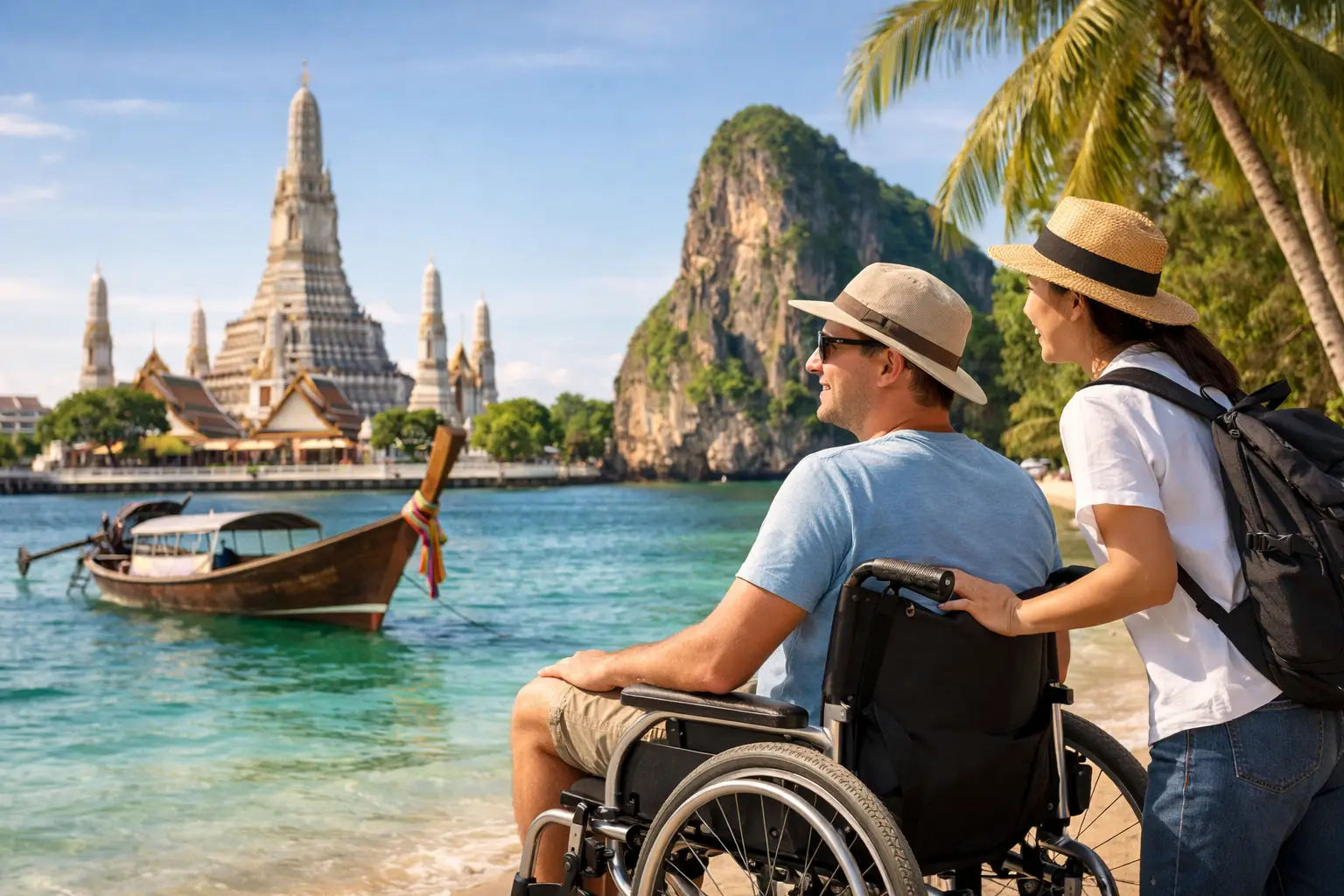
Thailand can be a brilliant trip for disabled travellers, but only if you plan for the country you are actually going to get - not the glossy version. If you are looking for an accessible Thailand travel example that feels realistic, the best approach is to build your trip around places and transport that give you room to stay independent, rather than hoping every pavement, ferry or hotel will somehow work out on the day.
That matters more in Thailand than in many destinations. You can have an excellent accessible holiday there, with friendly people, good value hotels and plenty to see, but access is inconsistent. One street might be easy, the next full of broken paving, steep kerbs or parked motorbikes. One hotel may have a proper step-free entrance and large bathroom, while another claims to be accessible because it has a lift and nothing more. So the smartest way to plan is to start with a practical route and then test each part of it.
You can watch the latest series of Thailand Adventures and previous series on Youtube, from the very beginning. They detail every aspect of life and travel as a less able person. My personal favourite is Series 5.
An accessible Thailand travel example for real planning
A strong first trip is Bangkok followed by a resort stay in Pattaya or Phuket, depending on what matters most to you. Bangkok gives you the city experience, major sights and large hotels with better odds of decent access. A resort base then gives you a slower pace, more space and time to work around any access issues without feeling pressured.
For many wheelchair and mobility scooter users, that balance works well. Bangkok is not always easy at street level, but it does offer modern shopping centres, international-standard hotels and a growing amount of accessible infrastructure. Pattaya can be useful because it is easier to move around in parts, has a wide choice of hotels and is generally straightforward for taxis. Phuket can also work, but distances are longer and some areas are hilly, so hotel location matters even more.
If this is your first time in Thailand, I would not try to cram in Bangkok, island hopping, overnight trains and multiple internal flights all in one go. That might suit an able-bodied traveller chasing variety. For someone using a scooter or wheelchair, too much movement creates too many points where things can go wrong.
Start with flights and airport reality
The flight is the first big decision, especially if you travel with a powered wheelchair or mobility scooter. A direct flight from the UK is usually the easiest option if you can get one at the right price. Less handling often means less risk to your equipment and less stress for you.
Before booking, check battery rules, mobility equipment dimensions and whether your airline has any restrictions on powered devices. Do not assume all airlines handle this in the same way. Some are clearer and better organised than others, and that difference becomes very obvious when you are trying to check in with a scooter.
Bangkok Suvarnabhumi Airport is large and generally manageable. It is modern, with lifts and accessible toilets, and airport assistance is usually available if requested properly in advance. The issue is less the airport itself and more what happens after you land. You need a transfer that can actually take both you and your equipment, not a vague booking that leaves you stranded at arrivals while people scratch their heads over how to load a scooter.
Pre-booking the right transfer is worth the effort. A standard taxi may be fine for a folding manual chair, but it is not always enough for a larger powered chair or scooter. If you need ramps or a vehicle with more space, sort it before you travel.
Choosing the hotel matters more than choosing the view
This is where many accessible trips are won or lost. In Thailand, a beautiful hotel in the wrong layout can be more limiting than a plainer one that lets you move around freely. Prioritise step-free entry, reliable lifts, enough turning space in the room, a genuine roll-in shower if you need one, and access around the pool, restaurant and reception.
Photos are useful, but they rarely tell the full story. Ask direct questions and ask for specific measurements if possible. How wide is the bathroom door? Is there a lip into the shower? Are there steps from reception to the restaurant? Is the accessible room on the same level as key facilities? If staff answer vaguely, treat that as a warning sign.
Larger international hotels often do better because they have more standardised room layouts and clearer accessibility procedures. That does not mean every chain hotel is automatically good, and it does not mean smaller Thai hotels are poor. It simply means your odds improve when the property is used to handling detailed accessibility requests.
For a Bangkok stay, being near a major shopping centre or on a flatter road can make daily life much easier. A hotel that looks slightly less exciting online but sits in a better location may give you a much better trip overall.
Getting around on the ground
Street access in Thailand is mixed and you need to go in with your eyes open. Some pavements are usable, some are narrow, cracked or blocked, and some disappear completely. In practice, many disabled travellers end up relying more on taxis than they would in a European city.
That is not necessarily a bad thing. Taxis and app-based car services can be affordable, and they remove a lot of the uncertainty. The trade-off is that you become more dependent on road traffic and pick-up points, and not every driver will understand what you need straight away. Keep instructions simple and allow extra time.
Public transport depends very much on the route. Parts of Bangkok's rail system are accessible, with lifts at some stations, but the network is not perfectly joined up and getting from the station to your final destination can still be the hardest bit. River boats and ferries can be more hit and miss. Some may be manageable with help, while others are simply not worth the hassle or risk.
This is where no-nonsense planning beats optimism. If a day out requires three transport changes, a crowded pier and a long stretch of rough pavement, ask yourself whether it is actually worth it. Often, a simpler day with one accessible taxi each way is the better call.
What a workable itinerary looks like
A good accessible Thailand travel example is seven to ten nights split between Bangkok and one resort base. Spend three nights in Bangkok, giving yourself time for the flight recovery, one or two sightseeing days and a flexible spare day in case the heat or transport slows you down.
In Bangkok, focus on places that are easier to access and close together. Modern shopping centres are not glamorous travel advice, but they are often some of the most practical places in the city for toilets, food, air conditioning and level access. They also connect well to nearby hotels and transport.
After that, move to a resort destination for four to seven nights. Pattaya can work for travellers who want a simpler base with easier hotel access and straightforward local transport. Phuket suits travellers who want a more scenic beach-style stay, but only if they choose location carefully and accept that some beachfront areas are awkward.
Your resort days do not need to be packed. One accessible hotel with a decent pool, nearby restaurants and enough room to move can be worth far more than a list of attractions you cannot comfortably reach. Independence is part of the holiday.
Beaches, boats and attractions - where expectations need adjusting
Thailand sells itself on beaches and island trips, but that is where accessibility can become patchy very quickly. Some beachfront promenades are fine, some beach clubs have level access, and a few places may offer beach wheelchairs or firm pathways. Many do not.
Likewise, boat trips can sound great online and be a nightmare in reality. Boarding often involves uneven surfaces, steep steps or unstable pontoons. If you can transfer and travel with support, some options may be possible. If you need your scooter or full wheelchair access throughout, many standard island excursions are likely to be unsuitable.
That does not mean there is nothing to do. It means picking attractions that match your needs rather than forcing yourself into activities designed without disabled travellers in mind. Temples, viewpoints and older historic sites often have steps and uneven surfaces. Newer attractions, shopping complexes, hotel facilities and some organised tours are usually easier bets.
Heat, fatigue and daily pacing
Thailand's climate is another factor that can catch people out. Heat and humidity can make transfers, street movement and even sitting outdoors more tiring than expected. For some travellers, that is a comfort issue. For others, it affects pain levels, energy and how long they can stay out.
Build your days around that reality. Early starts, long midday breaks and shorter journeys often work better than trying to be out all day. Make sure your hotel room is not just accessible but comfortable enough to spend proper downtime in. There is no prize for pushing through exhaustion and making the rest of the trip harder.
Why this sort of planning gives you more freedom
The point of using an accessible Thailand travel example is not to make your holiday rigid. It is to remove the weak points that can steal your confidence once you arrive. When flights, transfers, hotel access and local transport are thought through properly, you get more freedom to enjoy the place instead of constantly firefighting.
That is how Andy Wright Travel approaches destinations like this - not by pretending every barrier disappears, but by showing that with the right choices, Thailand can still be a very good trip for wheelchair users and mobility scooter users.
If you want Thailand to work, keep it simple, ask awkward questions before you book, and back your own judgement when something sounds too vague to trust. A trip does not need to be perfect to be worth doing - it just needs to be planned around the reality of how you travel.
0 Comments
Leave a Comment