
An Accessible New York Travel Example for 4 Days
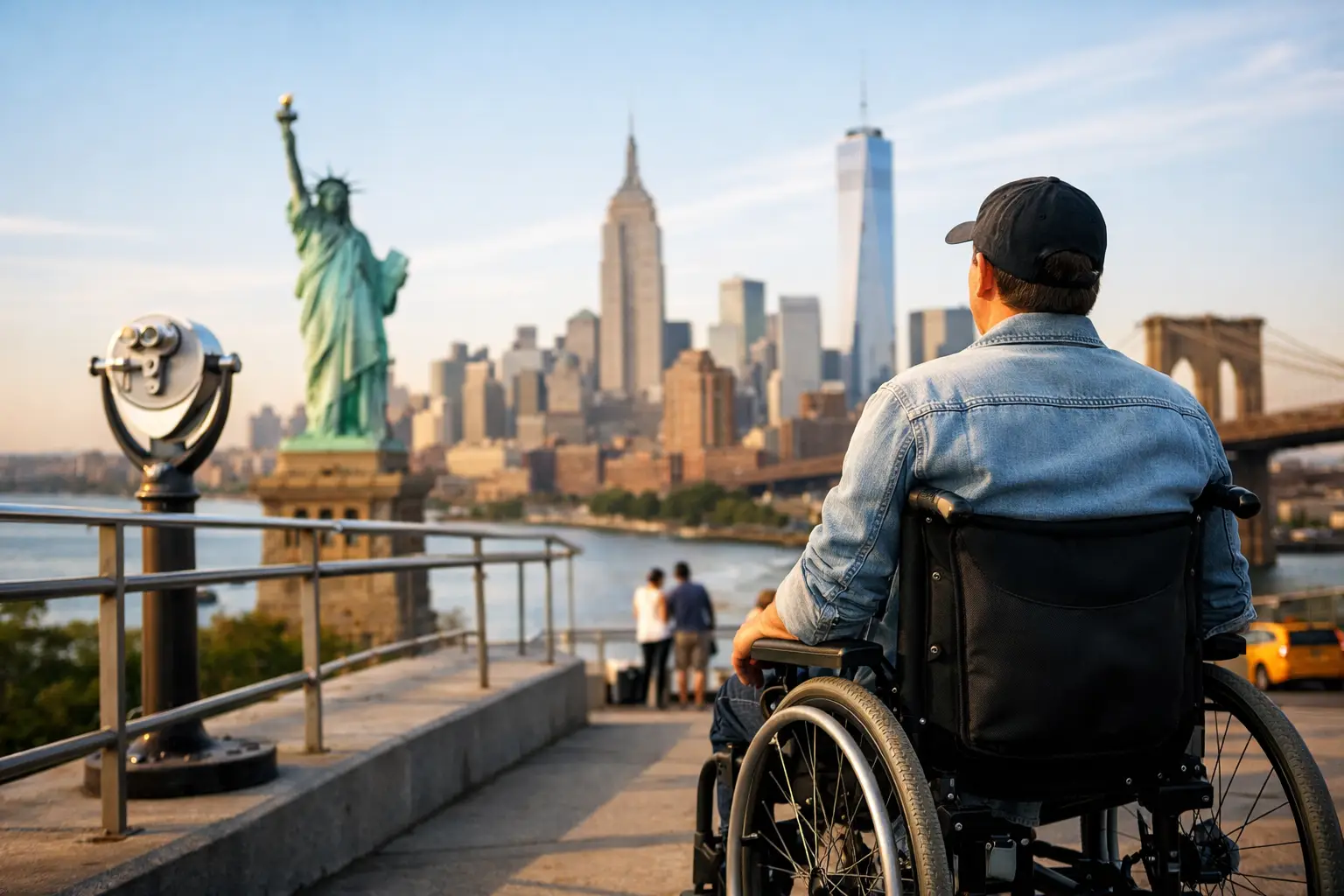
New York is not a gentle city. Pavements can be busy, kerbs can be rough, underground lifts can be out of service, and a supposedly accessible entrance may be around the next block. But it is also one of the most achievable big-city breaks for wheelchair and mobility scooter users if you plan around the reality on the ground. This accessible New York travel example is a four-day route built to keep the sightseeing worthwhile without turning every day into an endurance test.
The key is not trying to do Manhattan in one sweep. Pick an area, allow extra time, and have a second option ready if a lift, toilet or entrance does not work out. New York rewards a slower, more deliberate approach.
Before you book: make the practical decisions first
For a first visit, stay in Midtown, the Theatre District, Times Square, or near Central Park South if the budget allows. These areas put you within manageable distance of many major sights, with plenty of places to stop for food, shelter and accessible toilets. Downtown can also work well, particularly around the Financial District, but you may spend longer travelling to the museums and parks further north.
Do not book a hotel simply because it has an “accessible” filter. Contact it directly and ask for the dimensions that matter to you: clear width of the bedroom and bathroom doors, bed height, roll-in shower versus bath, grab rail positions, shower seat, turning space beside the bed and whether the route from pavement to room is step-free. If you use a larger scooter, ask whether it can fit in the lift and where it may be stored or charged. A hotel can have an adapted bathroom and still be a poor fit for your equipment.
For airport transfers, a pre-booked wheelchair-accessible vehicle gives the most certainty, particularly if you travel with a non-folding wheelchair or scooter. Yellow taxis include accessible vehicles, but availability is not something I would rely on after a long-haul flight. If you land at JFK, the AirTrain and rail connection may suit some manual wheelchair users and light luggage, but it is not the relaxing choice after an overnight flight. A direct accessible transfer costs more, yet it removes a great deal of stress.
Bring a plug adaptor, a charging extension lead if you need one, waterproof equipment cover, and a visible rain cover for yourself. New York weather can change quickly, and wet pavements around kerb cuts are not much fun on small scooter wheels.
Day one: Times Square, Broadway and a gentle Midtown start
Keep the first day close to your hotel. Jet lag, flight delays and the effort of getting settled can catch up with anyone, and there is no prize for racing straight to the furthest borough.
Start with Times Square in daylight. It is loud, crowded and not everybody’s idea of a relaxing attraction, but it is straightforward for wheels because pavements are generally wide and crossings are plentiful. The pedestrianised areas have level surfaces, although the crowds can make moving difficult later in the day. Morning is usually easier than evening.
From there, roll towards Rockefeller Center. The public areas are largely step-free, and the surrounding streets are practical for getting around. If you want an observation deck, check the attraction’s current accessibility arrangements and book a timed slot. Staff can direct you to the right entrance, but do not assume the main queue is the best route for a wheelchair or scooter.
A Broadway show is a strong first-night choice because you can rest while still enjoying New York properly. Book wheelchair spaces or companion seating directly with the theatre or its official booking system rather than hoping it can be sorted at the door. Older theatres vary enormously. Ask whether the accessible toilet is on the same level as your seat and whether there are any steps between the entrance, auditorium and facilities.
Day two: Central Park and the Museum Mile
Central Park is a sensible place to spend a full day, but do not underestimate its size. The main paths are mostly smooth and accessible, while some smaller routes are steep, uneven or muddy after rain. A scooter with decent battery range makes life easier. If you use a powerchair, plan your charging around a return to the hotel rather than assuming there will be a suitable socket in the park.
Enter around Central Park South or at the east side near Fifth Avenue. The paved routes around the lower part of the park are a good fit for a relaxed ride, with benches, open views and plenty of chances to stop. Avoid trying to cover the entire park unless that is genuinely how you like to travel. The lower section, Bethesda Terrace area and the paths around the reservoir can easily fill a day with breaks for coffee or lunch.
Pair the park with one major museum, not three. The Metropolitan Museum of Art is large enough to swallow several hours, while the Museum of Modern Art is easier to tackle in a shorter visit. Both are the sort of places where accessible entry, lifts and toilets are available, but routes within galleries can be busy. A weekday morning gives you more room to manoeuvre.
This is also a good day to test your confidence with New York streets. Most crossings have dropped kerbs and audible signals, but construction works are common. When a pavement is closed, the temporary route may be narrow or poorly signed. If a route looks awkward, turn back rather than forcing your way through traffic barriers.
Day three: Lower Manhattan and the waterfront
Lower Manhattan gives you some of the best accessible sightseeing for the effort involved. Begin at the 9/11 Memorial, where the open plaza is generally level and easy to navigate. The museum can be emotionally heavy as well as physically demanding, so allow time and do not overbook the rest of the day.
From there, head towards the World Trade Center transport hub and the waterfront. The area has wide pavements, modern buildings and better step-free access than many older parts of the city. The Oculus is worth seeing, although it can be busy and its polished floors may feel slippery in wet weather.
For a classic New York view without the complication of boarding a tour boat, take the Staten Island Ferry. It is free and has step-free access, with wide decks and excellent views of the Statue of Liberty. Boarding can involve ramps and crowds, so travel outside the busiest commuter periods if possible. You do not need to get off on Staten Island unless you want to. Many visitors simply enjoy the crossing and return on the next ferry.
The nearby Battery area is pleasant for a roll, but it can be exposed in cold or wet conditions. Bring an extra layer, especially if you sit still for long periods. The wind off the water can be sharper than you expect between tall buildings.
Day four: choose one neighbourhood and travel wisely
For your final day, choose between the High Line and Hudson Yards, or Greenwich Village and the Chelsea area. The High Line has lift access at selected entrances and is mostly step-free, but it can become packed. A mobility scooter will fit, yet you may find yourself moving at walking pace in a crowd. Go early, use an entrance with a confirmed lift, and have a ground-level alternative if the lift is unavailable.
Hudson Yards is modern, indoor-friendly and useful if the weather is poor. Its wide walkways, shops and food options make it an easier choice than cobbled streets in some older neighbourhoods. Greenwich Village has character, but uneven pavements, tighter spaces and busy cafés mean it requires more patience.
This is the day to use the underground only if it genuinely improves the journey. New York’s accessible stations are useful, but lifts can be out of service and some routes involve a long walk through large stations. Check lift status before setting off and again before travelling back. If your schedule matters, an accessible taxi or pre-booked vehicle may be the better option. Independence is not about proving you can use the hardest route. It is about choosing the route that lets you enjoy the day.
What this accessible New York travel example leaves out
A four-day plan cannot cover every famous sight, and that is deliberate. Trying to add the Empire State Building, Brooklyn Bridge, Coney Island, every museum and a shopping trip will turn your holiday into a series of rushed transfers and battery checks.
The most successful accessible New York trip is built around realistic distances, reliable toilets and enough downtime to deal with the unexpected. Carry water, know where your nearest indoor stop is, and keep your mobile phone charged for maps and transport updates. If you are travelling with a companion, agree in advance how you will handle a broken lift or an inaccessible restaurant rather than making the decision when you are tired and hungry.
New York will not always make accessibility easy. Still, with a suitable hotel, a sensible transport plan and permission to slow the pace, the city is very much there to be enjoyed. Plan the essentials well, then leave room for the moments that make a trip memorable: a view across the harbour, a quiet path in Central Park, or the feeling of rolling through a city you were once told might be too difficult.
0 Comments
Leave a Comment