
Accessible Long Haul Flights That Work
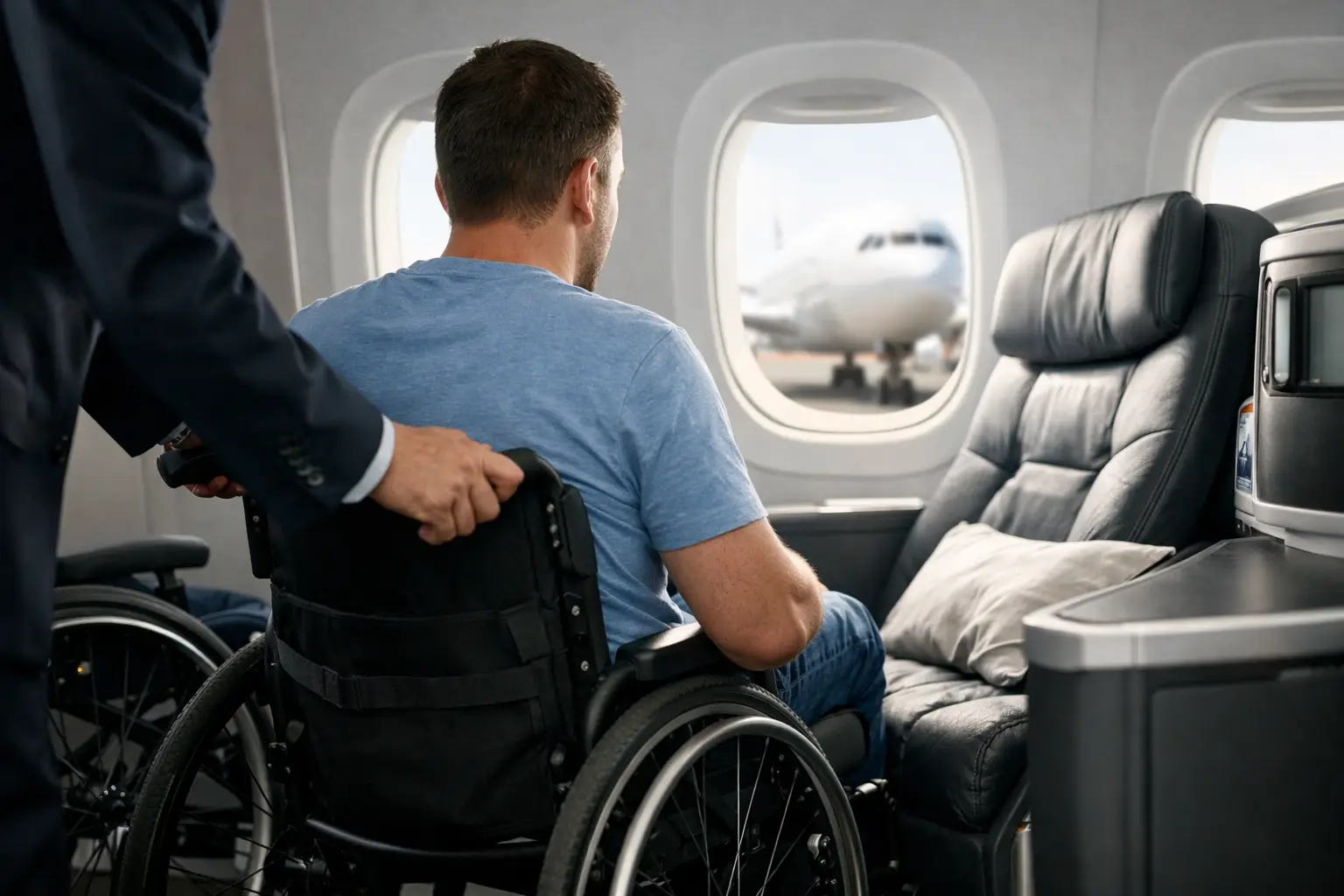
A long flight can go brilliantly or go wrong before you even leave the terminal. For wheelchair users and mobility scooter travellers, that usually comes down to details most airlines still treat as small print. Accessible long haul flights are not just about getting an aisle chair to the seat. They are about whether your equipment is accepted, whether assistance actually turns up, and whether you can get through 10 or 12 hours with some dignity intact.
That is why booking the cheapest fare first and asking questions later is usually a bad move. If you need proper support, the real test starts well before departure.
What makes accessible long haul flights genuinely accessible?
Airlines often claim they can accommodate disabled passengers, but that word covers a wide range of realities. Some are organised, consistent and clear about what they can do. Others are technically compliant while still leaving you chasing answers about batteries, transfer support or damaged equipment.
For most travellers with mobility needs, accessible long haul flights depend on five things working together: a suitable aircraft, trained airport assistance, clear rules for wheelchairs or scooters, realistic boarding arrangements, and enough information in advance to avoid nasty surprises on the day.
The weak point is usually not the flight itself. It is the handover between booking, airport staff, ground handling teams and cabin crew. If one part of that chain has the wrong information, the whole journey becomes harder than it needs to be.
Before booking, check the bits that actually matter
The biggest mistake I see disabled travellers make is relying on a generic accessibility page and assuming everything is covered. It rarely is. Long haul trips need more checking because the aircraft type, stopover, airport layout and baggage handling all make a difference.
Wheelchair and mobility scooter acceptance
Start with your equipment. If you use a manual wheelchair, a powered wheelchair or a mobility scooter, you need exact acceptance rules from the airline, not vague reassurance. Ask for the maximum dimensions and weight, whether the battery type is accepted, and whether they require advance approval.
Mobility scooters can be more awkward than wheelchairs because some airlines are stricter on size, weight or battery handling. A scooter that works perfectly for daily life may not be practical for air travel if it is too heavy or cannot be broken down safely. That is frustrating, but it is better to know before paying for flights.
Battery rules are non-negotiable
Battery policy can make or break a trip. Lithium batteries, dry cell batteries and gel batteries are not all treated the same way. Some must be removed and carried separately, some need terminals protected, and some airlines want technical specifications in writing.
Do not assume check-in staff will understand your battery setup by looking at it. Have the make, model, battery type and watt-hour details ready. If you can get written confirmation from the airline beforehand, even better. It gives you something solid to point to if there is confusion at the airport.
Seating and onboard space
Not all long haul cabins are equal. Bulkhead seats can offer a bit more room for transfers, but they are not always the best option if armrests do not move or if the toilets are a long way off. Some travellers prefer aisle proximity. Others need to be near a companion who can assist.
Be very clear about what you need. If you require a movable armrest, ask specifically. If you need an onboard wheelchair to reach the toilet, confirm the aircraft carries one. On some routes that is standard. On others, the answer can be surprisingly unclear.
Airport assistance on long haul journeys
Airport assistance is one of those services that sounds straightforward until you have to rely on it. On a short domestic route, delays are annoying. On long haul, they can affect check-in, security, boarding and connecting flights.
Request assistance as early as possible and make sure the booking record shows exactly what you need. There is a big difference between needing a push through the airport and needing support all the way to the aircraft seat. If you can self-transfer, say so. If you cannot stand or walk any distance, say that too.
The more precise you are, the better chance you have of avoiding the usual assumptions.
Connections need extra thought
If your itinerary includes a change of plane, leave enough time. Tight connections are stressful for anyone, but they are especially risky when assistance teams are involved. One late-arriving chair or buggy can leave you stranded in a huge airport with no realistic way to move quickly.
When possible, I would always lean towards fewer changes, even if the fare is higher. A direct flight may cost more upfront, but it can save a lot of hassle and reduce the chances of equipment going missing in transit.
The awkward truth about wheelchairs and scooters in the hold
This is the part nobody likes because the risk is real. If your wheelchair or scooter goes in the hold, there is always a chance of damage. That does not mean you should avoid flying, but it does mean you need to prepare properly.
Take photos of your equipment before travel. Photograph the chair or scooter from all angles, including controls, footrests, armrests and any areas that are already marked. Remove loose cushions, joystick controls or accessories if they can be detached safely. Label what stays attached.
It is also worth carrying a simple handling sheet showing how to switch the chair off, disengage motors and identify safe lifting points. Ground crews are not always trained on your specific model. A basic instruction sheet can prevent a costly mistake.
Gate-checking can help, but it depends
Some airports and airlines allow you to stay in your own wheelchair until the gate, which is usually the best option. It reduces the time your chair is out of your control. But that does not always happen smoothly, particularly on busy long haul departures where gate areas are crowded and staff are juggling multiple requests.
If gate-checking matters to you, ask about it in advance and confirm again on the day. Even then, treat it as a preference rather than a guarantee.
What the flight itself is really like
Long haul travel is tiring full stop. Add transfers, airport waiting time and limited cabin accessibility, and it becomes an endurance exercise. That is not meant to put anyone off. It is just better to be honest about it.
If you cannot access a standard aircraft toilet independently, think carefully about flight length and your own comfort. Some disabled travellers manage well by adjusting food and drink intake beforehand. Others prefer overnight flights, where they can sleep for part of the journey. There is no perfect answer here. It depends on your body, your condition and what support you have travelling with you.
Cabin crew can be helpful, but there are limits to what they are allowed to do physically. They are generally not there to lift passengers or provide personal care. If you need hands-on support, you may need to travel with someone who can help.
That can feel unfair, and frankly it is one of the areas where air travel still falls short. But pretending those limits do not exist helps nobody.
Choosing between airlines for accessible long haul flights
Price matters, of course it does. But when you are comparing accessible long haul flights, cheapest is rarely the smartest measure on its own. You are looking for competence, clarity and consistency.
Pay attention to how the airline answers your questions before you book. If they cannot give clear information about equipment, batteries, seating or assistance, that tells you something. A better airline is not always the one with the fanciest branding. Often it is simply the one with a disability team that knows what it is talking about.
Aircraft type matters too. Larger long haul aircraft may offer better onboard facilities, but the experience still depends on crew training and ground handling at both ends. One excellent outbound journey does not guarantee the return will match it.
That is why first-hand disabled travel content is so valuable. Generic reviews miss the details that decide whether a trip feels manageable or miserable.
A practical checklist before you fly
By the time you travel, you want as little uncertainty as possible. Make sure your assistance request is confirmed, your mobility equipment has been approved, your battery details are noted, and your seating is sorted. Carry documents for your chair or scooter, take photos before check-in, and arrive with enough time for things to move slowly.
If you are travelling with medication, pack it in hand luggage with anything essential for delays. If you need pressure relief items, transfer aids or spare parts for your chair, think ahead rather than hoping the destination will have what you need.
This is the sort of planning that gives you freedom, not the sort that takes it away.
Why accessible long haul flights are still worth it
Long haul travel asks more of disabled travellers. That is the truth. You often have to plan harder, ask more questions and prepare for systems that were not designed with you in mind. But that does not mean those journeys are out of reach.
Plenty of wheelchair users and mobility scooter travellers fly long haul every year and have brilliant trips because they planned around the real barriers, not the marketing version of accessibility. That has always been the point of honest travel advice at Andy Wright Travel - not pretending the problems are not there, but showing that with the right information, the world is still open to you.
If a destination matters to you, do not write it off just because the flight looks daunting. Break the journey down, get the facts, and make the airline prove it can meet your needs before you hand over your money.
0 Comments
Leave a Comment