
Accessible Hotel Room Review Guide
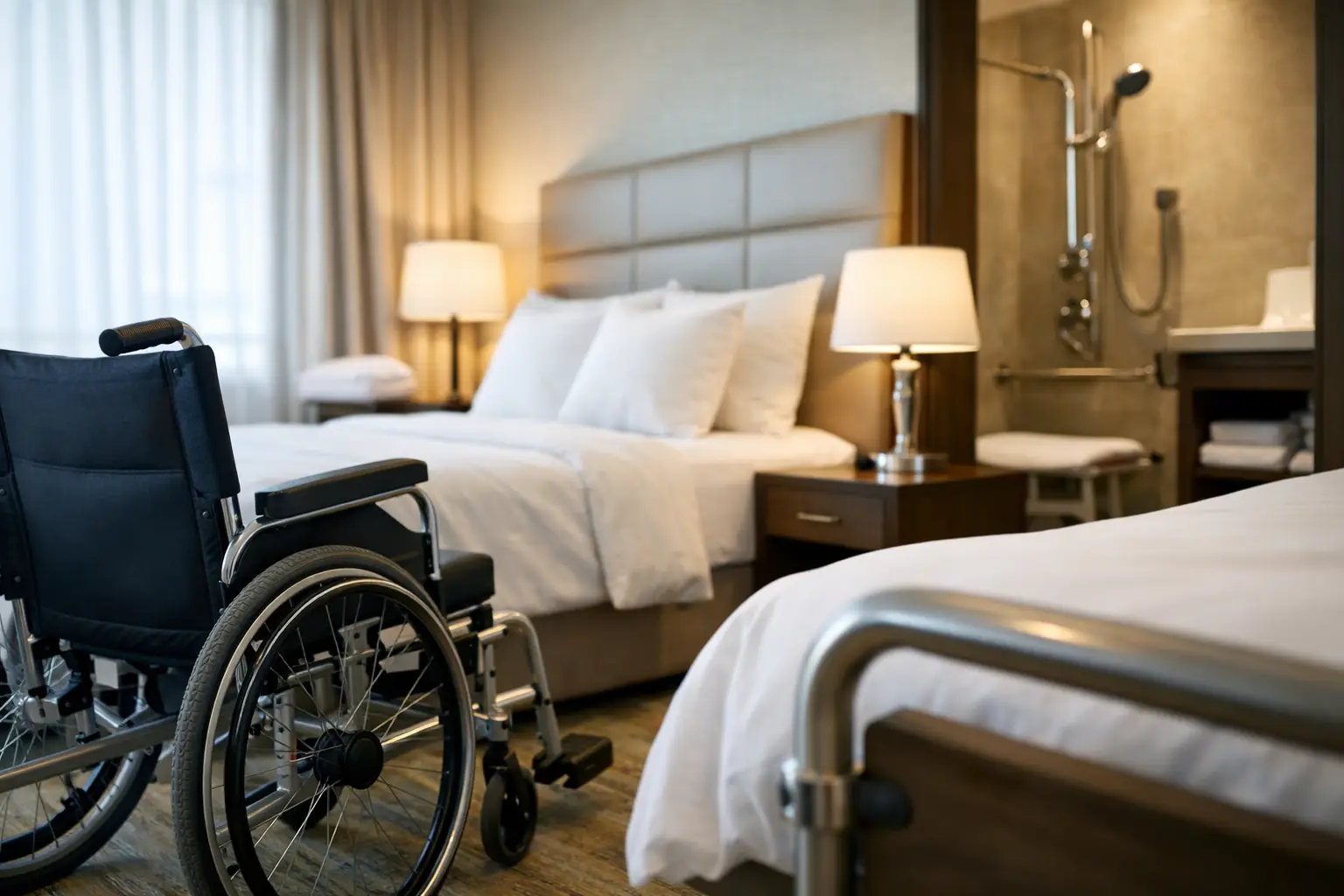
Book an “accessible” room often enough and you learn one thing quickly - that label tells you almost nothing. One hotel means a proper wet room, space beside the bed and step-free access from reception to room. Another means a grab rail in the bathroom and not much else. That is exactly why a solid accessible hotel room review matters, especially if you use a wheelchair, mobility scooter or need clear, step-free access throughout your stay.
For disabled travellers, the room itself is only half the story. You also need to know whether you can get through the front door without a drama, whether the lift fits your scooter, whether the bed height works for transfers, and whether the bathroom is genuinely usable rather than technically compliant on paper. A good review should remove guesswork. It should help you decide if a hotel supports your independence or creates extra hassle.
What an accessible hotel room review should actually cover
The biggest problem with many hotel reviews is that they focus on decor, breakfast and whether the staff were friendly. That is all fine, but it does not help much when your main question is whether you can physically use the room. Accessibility needs detail.
A proper accessible hotel room review should start before you even reach the bedroom. It should cover arrival, parking, drop-off, entrance doors, reception layout and the route to the lift. If there is a step at the entrance, a heavy manual door, or a lift that is too small for a larger mobility scooter, that can ruin the stay before you have even unpacked.
Once inside the room, the review needs to look at real usability. That means door widths, turning space, flooring, bed access, storage, plug socket position and whether furniture blocks movement. A room can look spacious in a promotional photo and still be awkward if the bed is pushed tight against one wall or the desk leaves no room to turn.
The bathroom deserves even more attention. This is often where hotels get accessibility most wrong. A few grab rails do not automatically make a bathroom accessible. What matters is whether you can roll in, position yourself properly, reach the sink, use the shower controls and transfer safely to the toilet.
How to read an accessible hotel room review properly
Not every disabled traveller needs the same setup, so the best review is one that gives facts rather than vague praise. “Very accessible” is not enough. Useful detail lets you decide whether a hotel works for your body, your equipment and your travel style.
If you are a wheelchair user doing side transfers, bed clearance matters. If you travel with a mobility scooter, lift size and charging access may be the bigger issue. If you can walk short distances but need a roll-in shower and minimal slopes, your priorities will be different again. That is why measurements, observations and honest limitations matter more than broad claims.
It also helps to pay attention to what is not said. If a review praises the room but says nothing about the route from the car park, I would want to ask more questions. If it mentions an adapted bathroom but avoids saying whether it is a wet room or a shower over bath setup, that is another warning sign.
The room details that matter most
Space is usually the first thing to check. Can you get in the door without clipping your wheels or scooter mirrors? Is there room to turn near the bed, or do you need a multi-point shuffle every time you move? Hotels often underestimate how much space mobility equipment actually needs.
Bed height is another big one. Too low and transfers become hard work. Too high and it can be unsafe. The ideal height depends on the traveller, but any accessible hotel room review worth reading should say whether the bed felt practical for transfers and whether there was clear space on one or both sides.
Flooring is easy to overlook, yet it makes a huge difference. Thick carpet can be hard going in a manual wheelchair and annoying on a scooter. Smooth, level flooring tends to be easier, but slippery surfaces are no good either. Reviews should mention whether the room was easy to move around in, not just whether it looked smart.
Storage and layout matter more than many hotels realise. Hanging rails can be too high, safes can be near floor level, and kettles are often tucked onto awkward shelves. None of these things sound dramatic on their own, but together they can turn a simple overnight stay into a tiring one.
Bathroom checks that should never be skipped
This is where honesty matters most in an accessible hotel room review. If the bathroom does not work, the room does not work.
First, check whether it is a true roll-in wet room or a standard bathroom with a few adaptations. A lip around the shower area may be manageable for some people and impossible for others. Fold-down shower seats can be useful, but only if they feel sturdy and are positioned properly under the shower controls. Fixed glass panels often get in the way.
Toilet position is another make-or-break detail. Grab rails are only useful if they are on the correct side for your transfer. Space beside the toilet matters just as much. If there is a bin, radiator or vanity unit blocking your approach, the setup may fail in practice.
Sinks can also be a problem. Some look accessible but have bulky units underneath that block knee space. Mirrors mounted too high, taps that are hard to turn and towel rails placed out of reach all add unnecessary frustration.
A good review should also mention drainage. Wet rooms that flood across the floor are not only annoying but potentially unsafe. If the whole bathroom becomes soaked after a shower, that is worth knowing before you book.
Beyond the room - access around the hotel
An accessible room is no good if the rest of the hotel works against you. You may be able to sleep there comfortably but still struggle with breakfast, bar access or getting out in an emergency.
The route from reception to the room needs to be genuinely step-free. Ramps should not be so steep that they become a workout. Lifts should be large enough for the equipment real people actually use, not just a compact manual chair. Corridors need enough width to pass housekeeping trolleys and navigate corners without scraping the walls.
Think about public areas as well. Can you reach the restaurant without a detour through a service corridor? Are there accessible toilets outside your room? Is there outdoor seating you can actually get to? These details matter on longer stays and can affect whether the hotel feels welcoming or just technically passable.
Why photos and first-hand detail matter
Written descriptions are useful, but clear photos often tell the real story. One image of the bathroom doorway, shower area or bed clearance can answer questions faster than a paragraph of hotel marketing copy. This is where first-hand reviews are far more useful than generic booking site descriptions.
At Andy Wright Travel, that lived-experience approach is what makes accessible travel content worth reading in the first place. If someone has actually used the room with mobility equipment, they notice the awkward corners, the heavy doors and the small practical wins that glossy hotel copy misses.
There is also value in hearing when something is good enough rather than perfect. Not every trip needs a flawless room. Sometimes a hotel works well for a short city break but would be tiring over a full week. Sometimes the bedroom is excellent, but the bathroom has one awkward compromise. Honest reviews should say that plainly.
Questions worth asking before you book
Even the best accessible hotel room review cannot cover every personal need, so it still pays to check a few points directly with the hotel. Ask whether the room has a roll-in shower or a shower tray, whether there is space on both sides of the bed, and what the lift dimensions are. If you use a scooter, ask where charging is possible and whether the route from entrance to room is fully step-free.
If you can, ask staff to send current photos of the exact accessible room type, not just a general room shot. Hotels change layouts, move furniture and refurbish bathrooms. Last year’s accessible room may not be this year’s.
It is also sensible to ask whether there are any hidden access issues, such as steep paths from accessible parking, heavy fire doors, or restaurant areas split across levels. The answer you get can tell you a lot about whether the staff understand accessibility in practical terms.
The difference between usable and truly accessible
This is the real point. Plenty of hotels offer rooms that are usable with effort. Fewer offer rooms that let disabled guests relax, move about easily and get on with their trip without constant workarounds.
That distinction matters because travel should not feel like a test of patience. A strong accessible hotel room review helps cut through the sales language and show what you are actually dealing with. It gives disabled travellers the chance to book with confidence, prepare properly and avoid nasty surprises on arrival.
The best reviews do not pretend one room suits everyone. They give enough honest detail for you to decide whether it suits you. That is what useful accessibility information looks like in the real world, and it is what turns travel from a gamble into a plan worth making.
When a hotel gets accessibility right, it does more than provide a place to sleep - it gives you the freedom to focus on the trip itself, which is exactly how it should be.
0 Comments
Leave a Comment