
Accessible Hotel Review London: What Matters
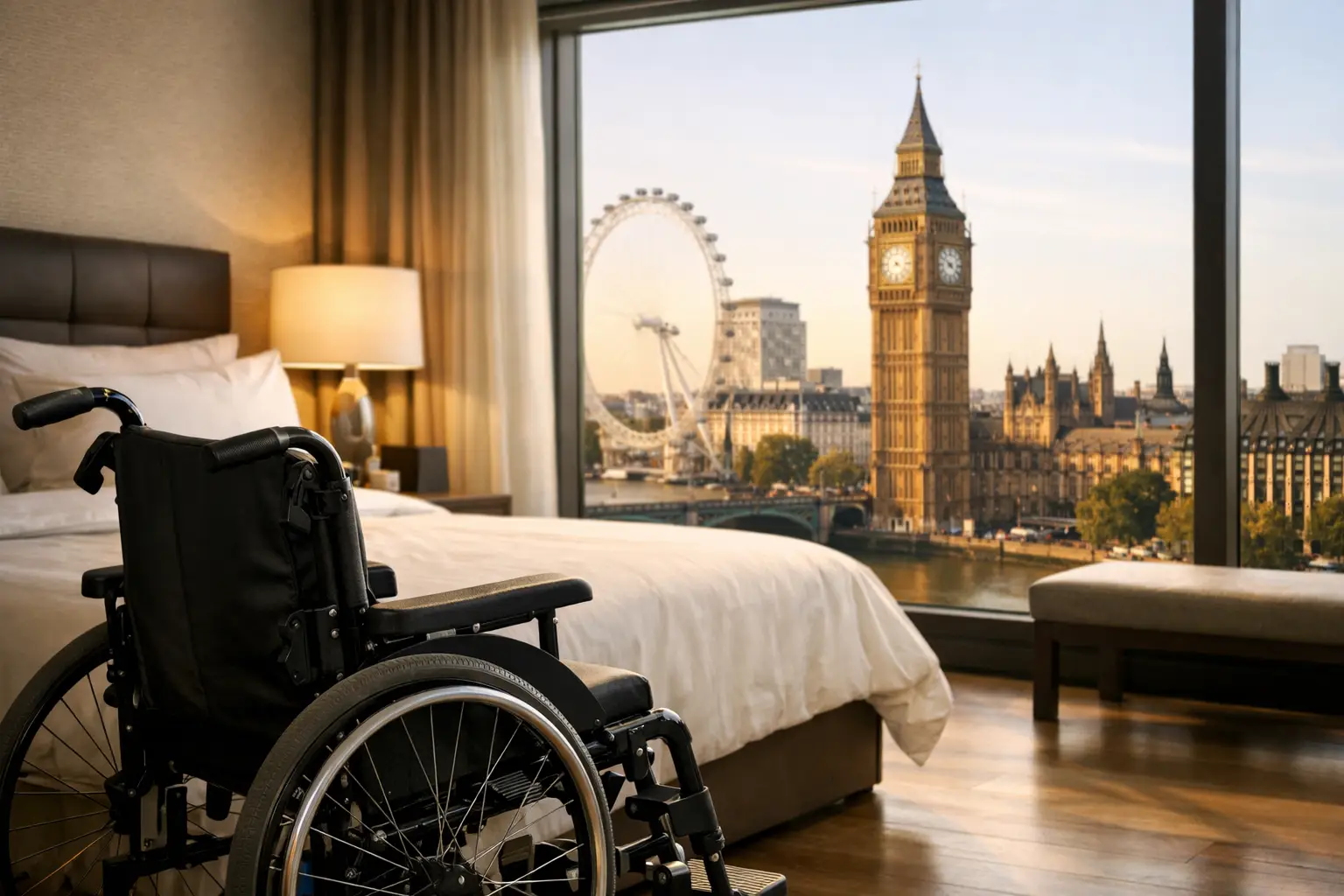
London can be brilliant for a city break, but hotel accessibility here is rarely as simple as ticking the box marked “accessible room”. If you are searching for an accessible hotel review London travellers can actually use, what matters is not the brochure wording. It is whether you can get through the front door without drama, reach the bed comfortably, use the bathroom with dignity, and get in and out of the local area without the day turning into a logistical mess.
That is the gap disabled travellers run into time and again. Hotels often describe themselves as accessible when they mean there is a lift somewhere in the building and a grab rail in the bathroom. For wheelchair users and mobility scooter users, that tells you almost nothing useful. London is packed with older buildings, awkward entrances, narrow corridors and busy surrounding streets, so the details matter more here than in many other UK destinations.
How to approach an accessible hotel review London travellers can trust
A proper review should start before you even enter the room. The first question is location, and not in the usual tourist sense. Being near a major attraction means very little if the nearest Tube station has no step-free access, the pavement outside is broken, or the hotel sits on a steep stretch of road that turns a short journey into hard work.
For most disabled travellers, the strongest London hotel locations are those near step-free stations, accessible bus routes and flatter streets. Central sounds appealing, but it can come with heavy pedestrian traffic, older buildings and more compromised layouts. Sometimes a hotel slightly outside the busiest core gives you a far better base if transport links are reliable and access around the area is easier.
The next issue is arrival. A review worth reading should tell you whether there are steps at the entrance, whether there is a ramp, and whether that ramp is permanently in place or only brought out on request. That last point matters. Temporary ramps can work perfectly well, but they can also mean waiting outside while staff search for the key or decide who knows where it is kept. After a long journey, that is not a small detail.
Reception also needs more than a passing mention. A low desk is useful, but so is enough clear turning space, automatic doors, sensible flooring and staff who understand access requests without treating them as unusual. Good accessibility is partly physical and partly operational. You can have a decent room ruined by poor staff awareness, and an imperfect building made far easier by a team that actually knows what they are doing.
What to check in the room
The room itself is where hotels most often overpromise. Plenty of places advertise an accessible room, but the usable space around the bed is too tight for a scooter or wheelchair, or there is only one side you can transfer from. That may still work for some travellers, but not for others. Any honest accessible hotel review London readers can rely on should make clear whether the room works for a manual wheelchair user, a powerchair user, or a mobility scooter user, because those needs are not always identical.
Bed height matters more than many hotel sites admit. Too low and transfers become difficult. Too high and they are unsafe. Space under the bed can matter too if you use a mobile hoist, although many city hotels simply are not designed with that in mind. If a hotel cannot accommodate hoist use, that should be stated plainly rather than dressed up in vague language.
Then there is furniture placement. A stylish room with oversized chairs, decorative tables and narrow circulation space may look good online but become a daily obstacle once you are in it. Practical accessibility usually looks less glamorous. It means enough room to turn, clear routes to the window and bathroom, and sockets you can reach without performing gymnastics.
Storage is another small but significant point. If hanging rails, shelves and safes are all positioned for standing guests, the room is only partly accessible. The same goes for curtains, climate controls and tea-making facilities. None of these things is dramatic on its own, but together they shape whether you can use the room independently.
The bathroom is often the deal-breaker
If there is one area where hotel accessibility claims regularly fall apart, it is the bathroom. A wet room can be excellent, but not every wet room is genuinely usable. Some have fold-down seats positioned awkwardly, grab rails in the wrong place, or shower controls that are impossible to reach once seated. Others flood half the room, which creates its own problem.
Toilets need enough transfer space beside them, not just a raised seat and a rail. The sink should be reachable, the mirror should be usable from seated height, and the bathroom door should not be so heavy or narrow that it becomes a battle every time. Pocket doors and outward-opening doors often work best, but many hotels still use layouts that waste valuable space.
A bath with a rail is not the same as an accessible shower room. That may sound obvious, yet it is still presented as an accessibility feature in some places. If you need a roll-in shower, say so clearly before booking and ask for exact measurements if the hotel cannot provide proper photos.
Beyond the room - the hotel has to work as a whole
A decent accessible room in an inaccessible hotel is still a compromise. You also need to know whether the breakfast area is step-free, whether the lifts are large enough, whether corridors are wide enough, and whether there are accessible toilets in the public areas. London hotels, especially in converted or older properties, can have lifts that technically exist but are too small for larger mobility equipment.
Restaurants and bars are another common weak spot. It is not unusual to find a level route into the hotel, then a single step down into the dining area or tables packed too tightly together. For some travellers that is manageable with assistance. For others it changes the whole stay, especially if you cannot comfortably use the hotel facilities and have to head back out every time you want food or drink.
Noise and crowding deserve mention too. They are not always thought of as accessibility issues, but they can have a real impact. If the accessible room is next to the lift, opposite a service cupboard, or on a route used constantly by staff and guests, rest becomes harder. In a city like London, where days can already be tiring, a quiet and practical room is not a luxury.
Questions worth asking before you book
Even the best-looking review should not replace direct contact with the hotel. Accessibility changes, room stock changes, and not every accessible room in the same hotel is laid out identically. Ask whether the entrance is step-free from street to room, whether the lift dimensions suit your equipment, and whether the bathroom is a true roll-in wet room or simply adapted.
You should also ask about bed clearance, door widths and whether charging a mobility scooter or powerchair in the room is permitted. Some hotels are fine with this. Others have restrictions or rooms where the layout makes charging awkward. It is better to know before arrival than to start rearranging furniture after check-in.
If you are travelling with a companion, check whether the room layout works for both of you. Accessible rooms in London can sometimes feel tight once you add luggage, charging cables and everyday kit. A room that is technically accessible for one person may become cramped for two.
Why photos and measurements beat marketing language
When hotels rely on phrases like “fully accessible” or “disabled friendly”, treat that as a starting point, not proof. Those terms are too broad to be useful on their own. Photos of the entrance, bedroom and bathroom, plus a few clear measurements, tell you far more than a polished paragraph ever will.
This is where lived-experience travel content is so valuable. It focuses on what actually affects your stay rather than what sounds good in a booking listing. That is why readers come to brands like Andy Wright Travel in the first place - to get the details that remove guesswork and help protect independence.
The trade-off with London hotels
There is no perfect formula because London forces trade-offs. A modern chain hotel may give you a better accessible bathroom and more reliable lift access, but it might be farther from the places you want to visit. A characterful central hotel may be better located and less practical in almost every other way. A larger property near a major station can make transport easier while feeling busier and less relaxed.
That does not mean London is a poor choice for disabled travellers. Far from it. It means picking the hotel that suits your own priorities rather than chasing a generic idea of the “best” one. If easy transfers and a dependable bathroom matter most, choose that. If being able to roll out and reach theatres, museums or the river in minutes is worth accepting some compromise, that is a valid choice too.
The strongest accessible hotel review London readers can use is one that is honest about those trade-offs. It should tell you not just what is available, but who it is likely to work for and where the weak points are. That kind of clarity gives you something far more useful than marketing confidence - it gives you the chance to plan properly, travel with fewer surprises and enjoy London on your own terms.
If you are booking a London stay, do not settle for the word accessible on its own. Ask harder questions, look for real detail, and trust practical evidence over glossy promises. The right hotel does not need to be perfect. It just needs to let you get on with your trip without fighting the room before breakfast.
0 Comments
Leave a Comment