
Accessible Hotel Review Brighton Checklist
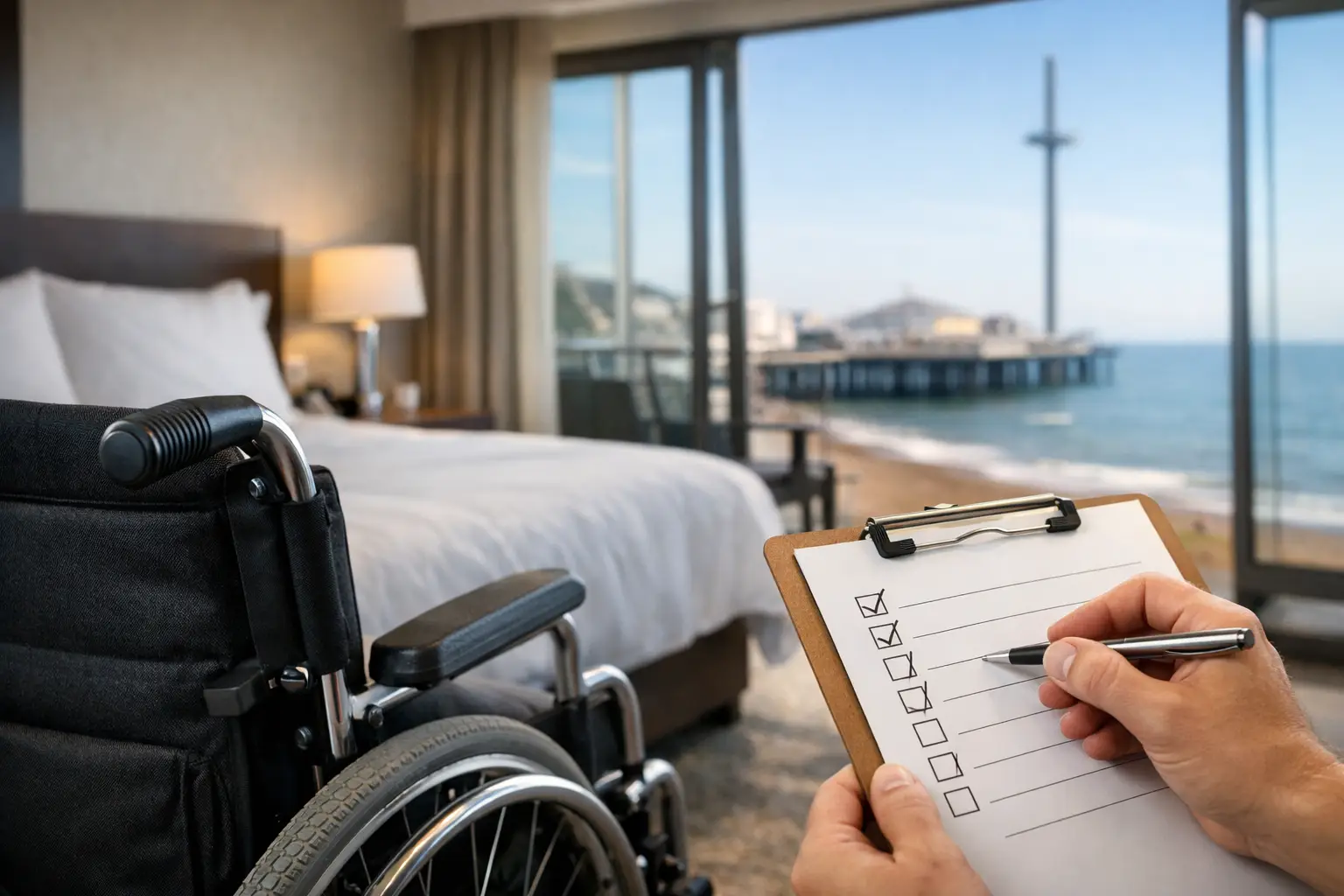
Brighton can be a brilliant place for a break, but an accessible hotel review Brighton visitors rely on needs to go far beyond the words “disabled access available”. The city has a mostly level seafront, plenty to do and strong rail connections, yet it also has steep streets, uneven pavements, busy pedestrian areas and older buildings with awkward layouts. The hotel you choose can make the difference between a proper independent holiday and a week spent working around avoidable barriers.
For wheelchair users and mobility scooter users, the real question is not whether a hotel has a lift. It is whether you can get from your vehicle or the station to reception, into your room, around the bathroom, to breakfast and back out again without needing a member of staff to lift, push or improvise.
What an accessible hotel review in Brighton should cover
A useful review starts before the front door. Brighton’s main railway station sits uphill from the seafront and central hotels. It is accessible, but the route down can be steep, busy and uncomfortable on a scooter or in a manual wheelchair, particularly if the weather turns. A hotel may be only half a mile from the station on a map, but that tells you very little about the effort involved.
Look for a review that explains how the reviewer arrived. Was there step-free access from a nearby taxi drop-off? Is there on-site parking, an accessible bay, or a practical place to unload a wheelchair or scooter? If parking is off site, find out how far away it is and whether the route includes kerbs, cobbles or hills. Central Brighton parking is limited and expensive, so this is not a minor detail.
The entrance also matters more than many booking listings suggest. A small step, heavy manual door or narrow vestibule can stop a trip before check-in. Photos are useful, but measurements are better. A genuinely helpful review will say whether there is level entry, a ramp, automatic doors, enough turning space and a lowered reception counter or somewhere suitable to complete check-in while seated.
Do not take “accessible room” at face value
Hotels use the word accessible very differently. One property may have a fully adapted bedroom and wet room; another may simply offer a ground-floor room with grab rails. Neither is automatically right or wrong, but you need the facts before handing over your money.
A decent accessible hotel review Brighton travellers can act on should cover the doorway width, bed height, clear space beside the bed and whether furniture can be moved. For a wheelchair user who transfers independently, the space on the transfer side of the bed can be the deciding factor. For a mobility scooter user, it is worth checking whether the scooter fits through the room door and can be charged safely without blocking an exit.
Ask about the bathroom in plain terms. Is it a true level-access wet room or does water collect around the toilet? Is there a fixed shower seat, a portable stool, or nothing at all? Are the grab rails positioned where you need them? Can a wheelchair get under the basin? A bath with a handrail may suit some guests, but it is not an accessible bathroom for everyone.
It is also sensible to ask whether the room shown online is the exact room you will receive. Accessible room categories sometimes contain different layouts. Request confirmation in writing, including the room type and any equipment the hotel has agreed to provide.
Brighton location can be more important than the hotel rating
Brighton is not one flat, uniform destination. The seafront around the Palace Pier, British Airways i360 area and much of the promenade is generally the easiest place to get around. It is a sensible base if your priority is rolling along the coast, visiting attractions or finding level places to eat. The promenade can become busy in summer, though, and sea spray, wind and shingle access points need thought if you use a scooter.
The Lanes are charming but can be harder work. Narrow passageways, crowds, uneven surfaces and limited space outside shops make them less predictable, especially at weekends. North Laine has a lively atmosphere but also more kerbs, side streets and slopes. Hotels in these central areas may be close to the action while being less practical for getting about independently.
A seafront hotel is not automatically the best choice either. Some are housed in grand older buildings where lifts are small, bedrooms are split across levels or the accessible route enters through a side door. Heritage character is lovely until it means a platform lift that is out of service or a ramp too steep to use safely. This is why operational detail beats glossy photographs every time.
Check the route, not just the postcode
Before booking, map the route from the hotel to the places you actually want to visit. Consider the slope, dropped kerbs, crossing points and whether you will need to use the road when pavements are crowded. If you plan to take in the Royal Pavilion, Brighton Palace Pier, the beach or a show at Brighton Dome, assess each journey separately.
For many people, a hotel slightly outside the busiest centre with reliable accessible parking and level local streets is a better choice than a fashionable address in the middle of the crowds. It depends on your energy, equipment, confidence in busy spaces and whether you are travelling with someone who can help when a route is not as expected.
Questions worth asking before you book
Do not be embarrassed about ringing a hotel. You are not asking for special treatment. You are checking whether the accommodation they are selling will work for you. Speak to the hotel directly rather than relying only on a central reservations team, and ask for someone who can physically inspect the room if necessary.
Get answers to these practical points:
- Is the route from the accessible parking or drop-off point to reception step-free, and can a mobility scooter use it?
- What are the bedroom and bathroom door widths, and is there clear turning space inside both rooms?
- Is the shower genuinely level access, with a suitable seat and grab rails, or is there a lip at the entrance?
- Can a mobility scooter be stored and charged safely, and is charging permitted in the bedroom?
- What happens if the lift is out of order, and are breakfast, the bar and any other facilities on an accessible level?
A good hotel will answer clearly, even when the answer is “we are not sure”. That honesty is more useful than a confident but vague promise. If staff cannot tell you whether there is a step at the entrance or whether the bathroom has a roll-in shower, treat that as a warning sign and keep looking.
Things reviews often miss
Noise and space are easy to overlook. Brighton is a lively city, and a room facing the seafront or a busy lane may bring traffic, late-night voices and delivery vehicles. If you need a hoist, use a larger wheelchair, travel with medical equipment or simply need room to manoeuvre, ask for the actual room dimensions rather than assuming an adapted room is spacious.
Breakfast deserves a mention too. Can you reach the dining area without steps? Is there enough room between tables? Is the buffet at a usable height, or will staff bring food to your table? The answer may not stop you booking, but it helps you avoid starting each morning with an unnecessary struggle.
Finally, check the hotel’s approach if something goes wrong. A broken lift, a blocked accessible entrance or a shower chair that has gone missing can affect the whole stay. Staff do not need to be accessibility experts, but they do need to listen, act quickly and understand that “we’ll see what we can do” is not a plan.
Brighton is absolutely worth visiting, and the right hotel gives you the freedom to enjoy it on your own terms. Take the extra ten minutes to ask awkwardly specific questions before booking. That is not being difficult - it is how you protect your independence and make room for the good bits of the trip.
0 Comments
Leave a Comment