
Accessible Ferry Review: What to Check Before You Sail
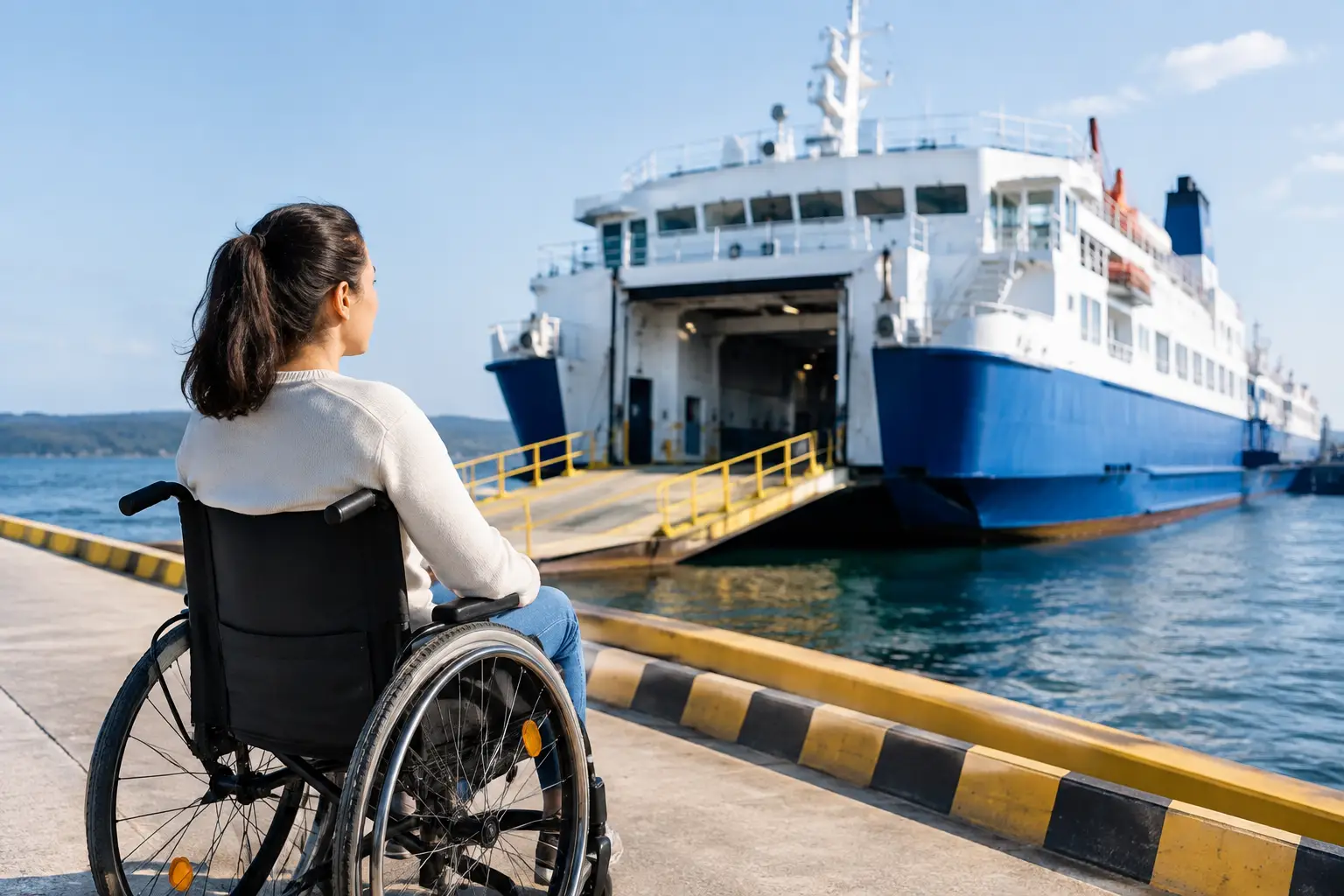
A ferry can be the easy part of a holiday or the point where the plan starts falling apart. The difference is rarely the crossing itself. It is the ramp angle, the port layout, whether your mobility scooter can stay with you, and whether the crew have a workable plan when the tide is low. This accessible ferry review explains what I would want to know before committing to a sailing.
For wheelchair users and mobility scooter users, a ferry operator saying it is "accessible" is only a starting point. It does not tell you how far you will travel through the terminal, whether there is a lift to the passenger deck, or if you will be separated from your equipment for several hours. A good review needs to deal in those details, not vague reassurance.
What an accessible ferry review should tell you
The first question is simple: can you get from your car, taxi or station to the ferry without an obstacle that makes the journey unmanageable? Some ports are compact and level. Others involve long outdoor routes, uneven paving, shuttle buses or separate check-in buildings. Bad weather can make an already awkward route much harder, particularly if you are using a small scooter or have limited upper-body strength.
Look for a clear account of the boarding process. Most vehicle ferries use a linkspan or vehicle ramp, and its gradient changes with tide, vessel loading and the berth being used. On a good day it may feel straightforward. On another sailing it can be steep, wet and busy with moving vehicles. Ask whether foot passengers board by a separate gangway and whether that route has steps.
The most useful information is specific: whether crew assist, whether you remain on your scooter, how long boarding takes, and whether you board before or after other passengers. Early boarding can remove the pressure of crowds and give the crew time to position you safely. It is worth requesting, rather than assuming it will happen.
The vehicle deck is not the passenger deck
On many larger ferries, passengers leave the vehicle deck once parked and travel upstairs to lounges, cafés and toilets. That means a lift is essential if you cannot use stairs. Do not rely on a lift being present somewhere on board. Check that it operates between the vehicle deck and the areas you need, and ask whether it is available throughout the crossing.
Smaller ferries can be more variable. Some have a single open deck with basic seating and a toilet; others have several levels but limited internal access. A short crossing may be manageable without every facility, but only if you know the reality beforehand. Being parked below deck for two hours with no usable toilet is not a small inconvenience.
If you travel in a wheelchair-accessible vehicle, ask where it will be parked and whether you can stay in it. Some operators allow this only in exceptional circumstances, while safety rules may require everyone to use passenger accommodation. The answer can change by route, ship and weather conditions, so get it confirmed for your actual sailing.
Booking assistance without leaving it to chance
Assistance should be added when you book, but a booking note alone is not enough. Ring the operator if your needs are more involved than a standard wheelchair space. Explain whether you use a manual wheelchair, powered wheelchair or mobility scooter, and give the weight and dimensions if requested. This matters because lifts, gangways and stowage areas have limits.
Be particularly clear about battery type. Most ferry companies carry mobility equipment without difficulty, but lithium battery rules can differ, especially where a service connects with international travel. Bring the manufacturer information if you have it, and make sure the battery is secure. A loose charger cable or removable battery left without instructions can create a delay at exactly the wrong moment.
Ask these questions in one conversation: where should you report on arrival, how early should you arrive, can you stay with your scooter, is there a lift from the car deck, and is there an accessible toilet on the deck you will use? Also ask what happens if the sailing is replaced by a different vessel. A route may normally use an accessible ship, but substitutions do happen.
Follow up by email if possible. It gives you a written record of what was agreed and is useful if staff at the port have not received the full details. Keep the message on your phone and carry a printed copy if that makes you more comfortable.
The port matters as much as the ship
A modern ferry can still be paired with a difficult terminal. Before you travel, find out where accessible parking, drop-off and check-in are located. Some terminals have blue badge spaces close to the entrance, while others place long-stay parking a considerable distance away. If somebody is dropping you off, check whether they can wait while you check in or whether they will be moved on immediately.
Toilets are another practical test. An accessible toilet behind security may be perfectly adequate once you are checked in, but useless if you arrive early and the waiting area is locked. If you need a changing places facility, do not assume one exists because the terminal is new or busy.
For rail-to-ferry journeys, leave more time than a journey planner suggests. Stations near ports are not always directly connected to the terminal, and the final section may involve a bus, a taxi or a walk through an industrial area. A missed sailing because an accessible taxi has not turned up is a costly way to begin a trip.
Check the conditions, not just the facilities
Photographs of wide decks and smart lounges can be misleading. What matters is whether the route through them remains usable when the ferry is full. Ask about fixed seating, narrow doorways, raised thresholds and where wheelchair spaces are located. A designated space next to a loud bar or directly beneath a television screen may be technically available but unpleasant for a long crossing.
If you use a mobility scooter, find out whether you can drive it into the passenger lounge. Some operators permit this; others require scooters to be left on the vehicle deck or in a specified area. Never assume your scooter will be charged while it is stored. Take enough battery for the whole journey at both ends, including delays and the distance around the port.
Sea conditions also matter. Crew cannot change the weather, but they should be able to explain their procedures. Rough crossings may mean certain decks are closed, lifts are temporarily unavailable, or passengers must remain seated. If you have pain, fatigue or a condition made worse by movement, choose a larger vessel or calmer sailing time where possible.
On-board facilities worth judging properly
An accessible toilet should be more than a door with a wheelchair symbol. The turning space, transfer area, alarm cord, sink height and ease of locking the door all affect whether it is genuinely usable. On older ships, accessible toilets can be tight even when they meet a basic standard. If you need a carer to assist, ask whether there is room for two people.
Food service is often overlooked. A self-service café may have a low counter but no staff available to carry a tray. Table spacing may be fine when the ferry is quiet and difficult when everyone boards at once. There is no shame in asking crew for help, but it is fair to expect a practical answer rather than being left balancing drinks on your lap.
For overnight crossings, cabin details need checking separately. A cabin described as adapted may have a wider door but a bathroom that still does not suit your transfer needs. Ask about bed height, clearance beside the bed, shower access, shower seat, grab rails and whether the accessible cabins are near the lift. If you use a hoist or travel with bulky equipment, measure before booking.
When a ferry may not be the right option
Ferries can offer more freedom than flying because you can take your own vehicle, larger mobility equipment and extra luggage. They can also be tiring. A very early check-in, a long crossing and a late arrival can turn a simple route into a demanding day.
It depends on your priorities. If keeping your scooter with you is essential, a route that requires it to be stored below deck may not work. If you need a reliable accessible toilet at all times, an older short-sea ferry may be less suitable than a longer route on a newer vessel. Choosing the best option is not about finding a perfect ship. It is about knowing which compromises are acceptable for you.
The best accessible ferry experience starts with asking awkwardly specific questions before you pay. You deserve proper answers, a route that respects your independence, and a holiday that begins at the port rather than after you have battled through it.
0 Comments
Leave a Comment