
Accessible Bangkok Transport Case Study
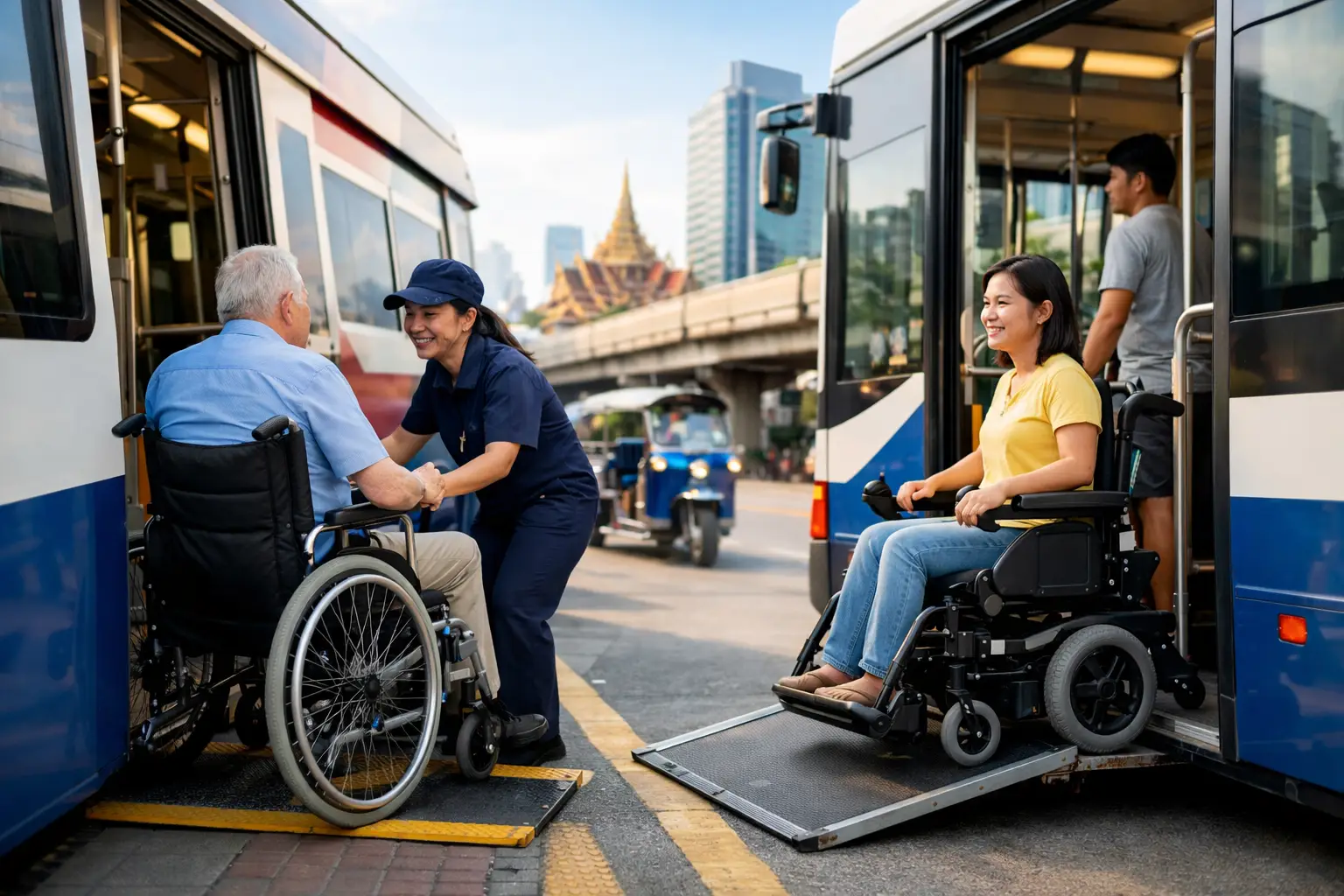
Bangkok tests your planning fast. You can leave a hotel with a solid route in mind, only to find a broken pavement, a steep kerb, a station lift tucked away behind poor signage, or a taxi driver who simply does not want the job. That is exactly why an accessible Bangkok transport case study matters - not as a glossy success story, but as a realistic look at what works, what does not, and how to keep your independence when the city is not built evenly.
For wheelchair users, mobility scooter users, and anyone travelling with reduced mobility, Bangkok can be more accessible than people expect, but less straightforward than the tourist brochures suggest. The key point is this: transport in Bangkok is not one single system. It is a patchwork. Some parts are genuinely useful, some are awkward, and some are best treated as backup only.
Accessible Bangkok transport case study - what Bangkok gets right
The biggest positive is that Bangkok does have several transport options worth considering. You are not relying on one inaccessible network. In practice, that gives you room to adapt when something goes wrong.
The BTS Skytrain is often the best place to start. Stations on the main tourist and shopping corridors are generally more manageable than the streets below. When lifts are available and working, the BTS can be one of the easiest ways to cover distance without dealing with traffic. Platforms are level enough for many users to board with minimal difficulty, though gaps and boarding conditions can vary by station and train position.
The MRT is similar in principle and, in some cases, feels slightly easier to use because the stations can be more modern and better laid out. If your hotel is close to an accessible MRT station, that can remove a lot of daily hassle. The air-conditioned environment also matters more than people think. In Bangkok heat, reducing the time spent waiting at street level can make the whole day more manageable, especially if you fatigue easily.
Taxis are another reason Bangkok remains possible for many disabled travellers. They are not perfect, and they are not always welcoming, but they are plentiful enough that you can often solve a difficult route by changing your plan and taking a cab instead. For some travellers, especially manual wheelchair users with a folding chair, taxis may end up doing more of the heavy lifting than rail.
That said, none of this means Bangkok is easy. It means it is workable with the right expectations.
Where the transport system falls short
The problem is not only vehicles or stations. It is the gap between accessible points. A train station may have a lift, but the route from your hotel to the station could involve cracked paving, narrow sections, parked motorbikes, or dropped kerbs that are either too steep or missing altogether.
This is where many accessibility claims fall apart. A station can tick the right boxes on paper and still be difficult in real life because the surrounding streets are hostile to wheelchair or scooter movement. In Bangkok, that last 200 metres often matters more than the train itself.
Lifts are another weak point. Even where they exist, you cannot assume they will be obvious, close to the entrance you need, or in service. Sometimes the accessible route takes longer, requires crossing at a different level, or sends you through part of the station that is poorly signposted. If you travel independently, this is frustrating. If you are already tired or under time pressure, it can become the part of the day that throws everything off.
River transport is where expectations need the biggest reset. Bangkok’s boats are famous and useful for many tourists, but from an accessibility point of view they are hit and miss at best. Piers can be awkward, boarding can depend on water level and movement, and staff assistance is inconsistent. For some wheelchair users, this simply will not be a sensible option. For others, it may be possible at certain piers and impossible at others. That uncertainty makes it a poor backbone for your transport plan.
Lessons from using the BTS and MRT
If I were planning Bangkok around mobility needs, I would treat the BTS and MRT as the primary network only when three things line up: your hotel is close to an accessible station, the destination station also has lift access, and the street-level route on both ends is manageable.
That sounds obvious, but it changes how you choose accommodation. A hotel that is technically central is not always the best choice. A hotel with a clean, direct route to a usable station can save far more energy than one in a busy area with rough pavements and awkward crossings.
It is also worth accepting that one station can be much easier than the next, even on the same line. That means route planning should be specific, not broad. Do not just decide to use the BTS. Work out which station entrance you need, whether there is lift access there, and what the pavement looks like on arrival.
Timing matters too. Bangkok’s rail systems can get busy, and crowd pressure changes the experience. If you use a larger scooter or need more space to board, off-peak travel will usually be kinder to you than trying to force your way through rush hour. That is not about being cautious for the sake of it. It is about preserving energy and avoiding unnecessary stress.
Taxis in this accessible Bangkok transport case study
Taxis are often the practical answer when the rail network is only partly usable. They can bridge inaccessible gaps, get you back when fatigue kicks in, and rescue a day when a pavement route turns out worse than expected.
But there are trade-offs. Standard Bangkok taxis are not wheelchair accessible vehicles in the way many UK travellers would hope. If you use a non-folding powerchair or larger mobility scooter, this can be a major limitation. For folding wheelchairs, or for travellers who can transfer, taxis become much more realistic.
Driver willingness can vary. Some drivers will help without fuss, others will wave you on. That unpredictability is part of the planning. If a taxi is your fallback, build in extra time and do not assume the first one will take you. For disabled travellers, that margin matters.
Traffic is the other issue. A taxi may be physically simpler than battling pavements or lifts, but Bangkok congestion can be brutal. Sometimes the easiest option is not the fastest, and sometimes the train will still win if the station access is decent. It depends on the route, the time of day, and your own stamina.
Hotel location is really a transport decision
One of the clearest lessons from Bangkok is that accessible transport starts long before you leave the room. Your hotel choice shapes everything.
If your accommodation sits near a station with reliable lift access and decent pavements, the city opens up. If it is on a road with uneven surfaces, narrow access, or awkward kerbs, every journey becomes harder before it even begins. For mobility scooter users especially, this can be the difference between a confident independent day and an exhausting stop-start battle.
This is where lived experience matters more than generic accessibility labels. A hotel may call itself accessible because it has a roll-in shower or lift, but that does not tell you whether the surrounding area is usable. For many disabled travellers, outside access is half the story.
What I would advise before travelling
Bangkok rewards preparation, but not overconfidence. Check stations, check street views where possible, and be realistic about how far you can manage in heat and traffic. If you are planning a full day out, think about your return route before you set off. Getting somewhere is only half the job.
I would also recommend building your days around fewer transfers. Every change between pavement, station, platform and vehicle adds friction. A route with one longer taxi trip may be easier than a technically cheaper route involving multiple lifts, crossings and station changes.
For travellers following Andy Wright Travel-style planning, this is the heart of it: independence is not about proving you can do every route the hard way. It is about using the city intelligently so you keep your energy for the parts of the trip that actually matter.
Is Bangkok manageable for wheelchair and scooter users?
Yes, for many people it is. But manageable and easy are not the same thing.
Bangkok is a city where accessible transport exists in useful pockets rather than as one fully joined-up experience. The BTS and MRT can be very helpful. Taxis can solve problems quickly. River boats are far less dependable from an accessibility perspective. The streets in between are often the real challenge.
So the honest answer is that Bangkok can work well if you plan around reliable transport corridors, choose your hotel carefully, and stay flexible when a route is not as smooth as it looked online. If you go expecting perfect accessibility, you will be disappointed. If you go prepared to mix methods and adjust on the ground, you have a far better chance of enjoying the city on your own terms.
That is often what accessible travel comes down to - not waiting for a place to be perfect, but knowing enough to move through it with confidence.
0 Comments
Leave a Comment