
Accessible Aviation for Wheelchair Users
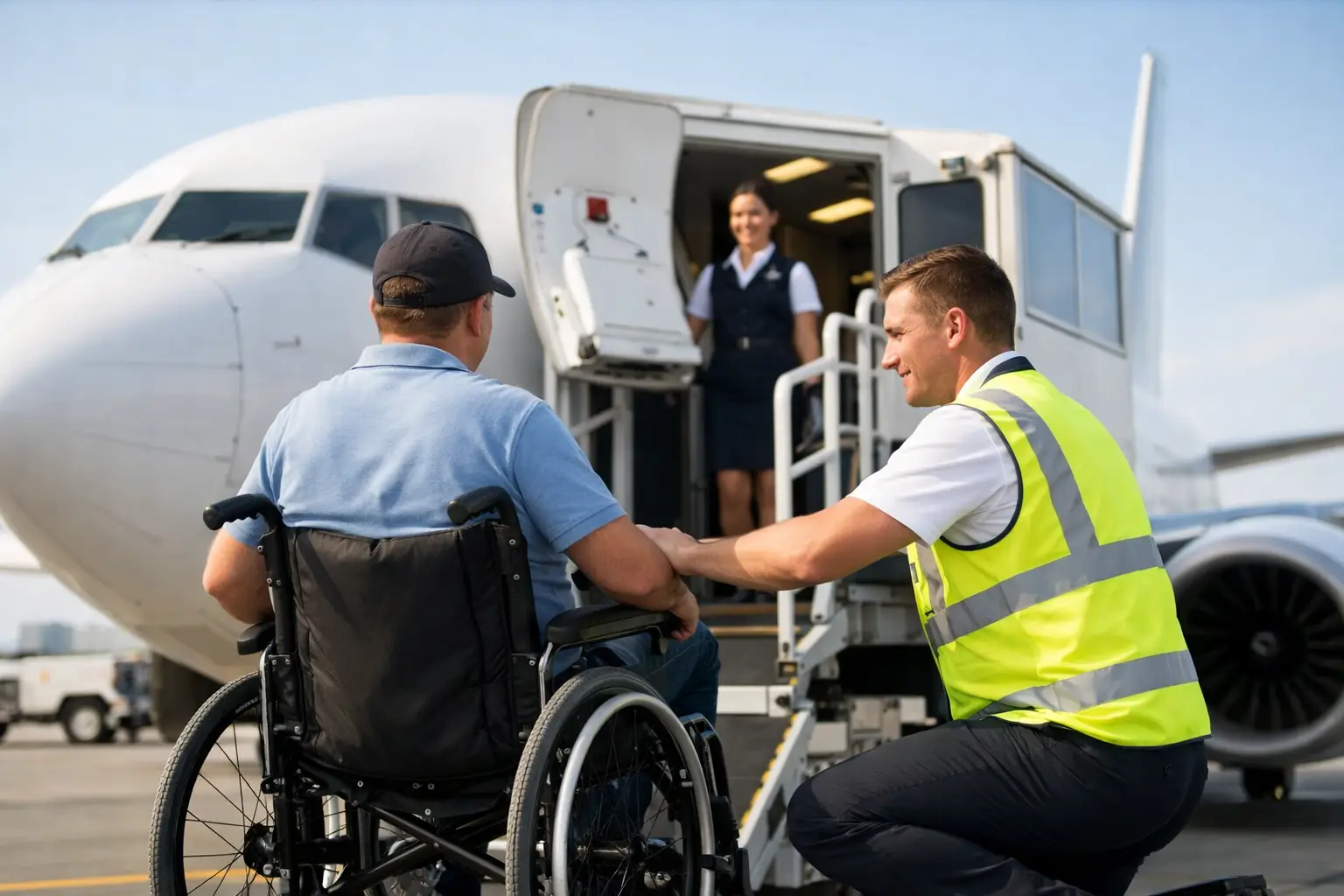
A flight can be the part of a holiday that causes the most anxiety, and usually for good reason. Accessible aviation is not just about being offered an aisle chair at the gate. It is about whether your wheelchair or mobility scooter is handled properly, whether staff know the plan, whether the seat works for your body, and whether you can get from airport drop-off to your hotel without losing your independence.
Plenty of disabled people fly successfully every day. But the smooth journeys are rarely down to luck. They come from asking the right questions early, giving clear information, and refusing to accept vague assurances that everything will be “fine”.
Accessible aviation starts before you book
The cheapest flight is not always the best choice if it leaves you with a tight connection, a late-night arrival with no accessible transport, or a carrier that cannot confidently explain its mobility equipment process. A direct flight is often worth paying more for, particularly if you travel with a powered wheelchair or scooter. Every extra airport is another baggage hold, another team, and another opportunity for equipment to be mishandled.
Look at the airport as closely as the airline. A modern terminal may have accessible toilets and assistance desks, but that does not automatically mean an easy transfer to the aircraft. Remote stands can mean a high-lift vehicle rather than an air bridge. That can be perfectly manageable, but it is worth knowing in advance, especially if you have limited trunk control, cannot use stairs, or find long waits in an aisle chair uncomfortable.
When comparing flights, check the arrival time against your onward transport. Accessible taxis and adapted transfers often need booking in advance. Landing at 11.30 pm may be fine if the hotel can arrange a suitable vehicle, but it can become a headache if the only available transfer has a small boot and no ramp.
Tell the airline what you actually need
Do not simply tick “special assistance” and assume the details will follow you through the booking. Contact the airline or book through the assistance section as soon as your flights are confirmed. Explain what you can and cannot do, rather than relying on broad labels such as “wheelchair user”.
For example, staff need to know whether you can walk short distances, climb aircraft steps, transfer independently, sit upright in a narrow aisle chair, or need help getting to your allocated seat. If you travel with your own chair, give its type, dimensions, weight and battery information. Keep a copy of everything you submit, including booking references and confirmation emails.
If an agent cannot answer a practical question, ask for it to be checked with the airline’s specialist assistance or dangerous goods team. This is particularly relevant for powered equipment. A confident guess from a call-centre script is not the same as approval to carry your chair.
Flying with a mobility scooter or powered wheelchair
Your mobility equipment is not ordinary luggage. It is part of your mobility, safety and independence. Treating it as an oversized suitcase is one of the biggest mistakes in accessible aviation planning.
Before flying, find the manufacturer’s handbook or battery specification. Airlines normally need to know whether the battery is sealed lead acid, lithium-ion or another type, plus the watt-hour rating for lithium batteries. Requirements vary between airlines and can change, so check the rules for every carrier on your itinerary, including codeshare flights.
A folding scooter may sound easier to travel with, but size and weight still matter. Some airport lifts and aircraft holds have practical limits. A large powered wheelchair may be accepted while an apparently compact scooter is not, depending on its battery or loading arrangement. Never assume that a piece of equipment was accepted on one airline last year and will automatically be accepted on another this summer.
Make a one-page handling sheet for your chair or scooter. Attach a durable copy where handlers can see it and carry another with you. Include the make and model, total weight, instructions for engaging and disengaging the motors, where to lift safely, how to isolate the battery, and your contact details. Clear photos are useful too, particularly of the control panel, battery compartment and any removable parts.
Remove what can safely be removed before handing the equipment over. Cushions, joystick controllers, headrests, side guards and loose bags are all vulnerable. Put essential removable parts in the cabin where possible, but check airline cabin-baggage rules first. If a joystick must remain attached, protect it as well as you can without preventing staff from operating the chair.
Gate delivery is worth requesting
Ask for your wheelchair or scooter to be returned at the aircraft door rather than at baggage reclaim. It is not guaranteed in every airport or aircraft setup, but it is usually the best arrangement where possible. Waiting for your chair in a borrowed airport wheelchair can leave you dependent, uncomfortable and unable to access your usual posture support.
Confirm the request at check-in, at the gate and again when you hand over your equipment. Repetition is not being difficult. It is sensible when several teams are involved.
Take photographs of the chair or scooter immediately before it goes into the hold. Photograph existing marks as well as its overall condition. If damage happens, report it before leaving the airport and get a written report. Do not let a vague promise that someone will contact you replace a proper record.
The aircraft seat matters too
Aircraft cabins are not designed with disabled travellers in mind, and the right seat depends on your needs. An aisle seat gives easier transfers, but you may be bumped by passing passengers and trolleys. A window seat can provide more support and privacy, but getting out quickly is harder. Bulkhead seating may offer space, yet fixed armrests can make a side transfer impossible.
Ask whether the armrest on your chosen aisle seat lifts fully. This small detail can decide whether you can transfer with dignity or whether staff have to improvise in a narrow cabin. If you need a specific position, support cushion, harness arrangement or help transferring, raise it during booking rather than at boarding.
For longer flights, think honestly about toileting. Most aircraft have an onboard wheelchair, but using it requires cabin crew assistance and the toilet itself may still be very tight. Some newer aircraft have improved accessible lavatories, though this depends on the route and aircraft type. If you cannot use an onboard toilet, plan fluids, medication and journey timing with your own health needs in mind. There is no one answer that suits everyone.
Build in time, but protect your energy
Airports often advise passengers needing assistance to arrive early. That is sensible, but an unnecessarily long wait can be exhausting. Check the airport’s recommended arrival time and allow extra time for equipment paperwork, security and assistance collection. Then organise drop-off, parking or rail travel so you are not already worn out before check-in opens.
At security, explain what you need before the screening starts. You may need a pat-down, a separate search of your equipment, or extra time for medication and medical supplies. Keep essential medicines, continence supplies, chargers, transfer aids and a change of clothes in hand luggage. If your checked mobility equipment is delayed or damaged, those items become even more important.
A companion can make the process less stressful, but independent travellers should not be made to feel they need one simply because they use a wheelchair. Airport assistance is there to support your journey, not take control of it. Be clear about where you want help and where you prefer to manage yourself.
Know your rights, then stay practical
When departing from a UK airport, disabled passengers and passengers with reduced mobility are generally entitled to airport assistance without an extra charge, provided the request is made in good time. Airlines and airports have responsibilities, but rights on paper do not stop poor communication on the day.
That is why preparation still matters. Carry confirmations, note staff names if something goes wrong, and speak to a supervisor if you are being told something that conflicts with your agreed arrangements. Stay calm where you can, but do not minimise a genuine problem to avoid making a fuss. A damaged chair, an unsafe transfer or being left without assistance is not a minor inconvenience.
Accessible aviation is improving, but it is not yet consistently accessible. The goal is not to pretend every flight will be effortless. The goal is to plan for the real pinch points, protect the equipment that gives you freedom, and arrive ready to enjoy the place you travelled all that way to see.
0 Comments
Leave a Comment