
Accessible Apartment Versus Hotel Rooms: Which Fits?
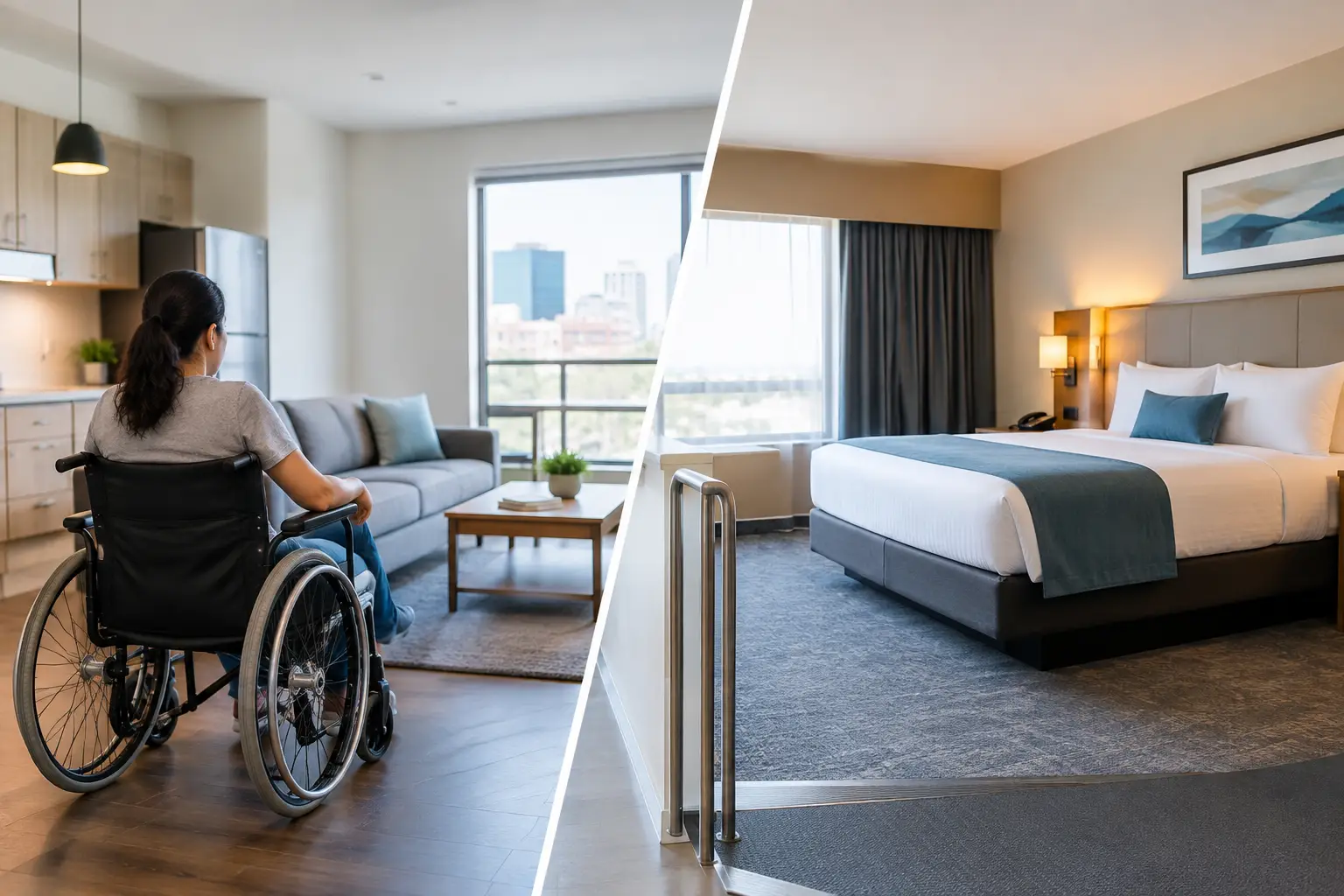
A booking page can call a place accessible and still leave you unable to get your mobility scooter through the bathroom door. That is why the accessible flat versus hotel rooms question is not really about which looks nicer in the photos. It is about how you will live there each day: charging equipment, washing safely, getting out when you want to, and getting help if something goes wrong.
For some trips, a hotel with a genuinely adapted room is the simplest and safest option. For others, a serviced flat gives you the room and routine that make a holiday feel properly independent. Neither is automatically better. The right choice depends on your access needs, who you are travelling with, how long you are away and how much certainty you need before arrival.
Accessible flat versus hotel rooms: the real difference
A hotel accessible room is usually designed around short stays. You are more likely to find a level route from reception, a lift, an adapted en-suite and staff on site. If the property understands accessible stays, there may be a shower chair, grab rails, emergency cord and a bed that can be approached from at least one side. Breakfast, housekeeping and reception support can take pressure off both the traveller and their companion.
A serviced flat, or accessible holiday flat, is built around having more control over your day. You may have a separate bedroom, a proper kitchen, a living area and space to park or charge a scooter without moving furniture every evening. That matters on a week-long break, particularly if you need to prepare specific meals, manage medication, rest during the day or travel with a carer, family member or assistance dog.
The catch is that flats are far less consistent. A listing may have step-free access to the building but a tight bathroom inside. It may show a lift but not say whether the lift is wide enough for a larger powerchair. It may offer an adapted shower but provide no seat, no suitable turning space and nowhere dry to leave a wheelchair while transferring. You need details, not an accessibility tick-box.
When a hotel room makes more sense
A hotel is often the stronger choice for a short city break, an overnight before a flight, or any trip where being close to transport matters more than having a kitchen. The practical benefit is support. If the room key stops working, the shower seat is missing or the accessible entrance is locked, there is usually somebody to speak to straight away.
That support can be especially valuable for solo travellers. A hotel with a 24-hour reception, evacuation procedures that include disabled guests and staff who know where the accessible route is can bring real peace of mind. Ask directly how they assist guests who cannot use stairs in an emergency. Do not accept a vague answer about the fire alarm being audible if you use a wheelchair or scooter and are staying above ground level.
Hotels can also be easier if you are relying on taxis, accessible buses or rail. Central properties are often nearer stations, restaurants and attractions, while blocks of flats may be in residential areas or on the edge of town. A beautiful, spacious flat loses some appeal if the nearest dropped kerb is 15 minutes away along a steep road.
But hotel rooms have limits. Accessible rooms can be small, with one chair, little floor space and a bed positioned against a wall. Some have a roll-in shower but no usable shelf for toiletries. Others call themselves accessible because they have a lift, while the bathroom is unchanged. A couple travelling with a scooter, luggage and equipment can quickly run out of room.
Why an accessible flat can be better for longer stays
If you are staying for five nights or more, space can make a major difference to comfort and independence. A separate living area means one person can rest while another makes a drink, works or watches television. A kitchen gives you control over meals instead of having to find an accessible restaurant three times a day. That is not a luxury when fatigue, dietary requirements or medication timings are part of the picture.
Flats can also work well for families and groups. Rather than booking two hotel rooms and hoping they are near each other, you may be able to find a two-bedroom property with one clearly adapted bathroom. It can make travel less stressful for everyone, provided the access is genuine throughout the property.
For scooter users, the ideal flat has a level entrance, wide internal doorways, a ground-floor bedroom or reliable lift, and a safe charging point near the front door. Do not assume you can charge a scooter in a communal corridor or leave it in a lobby. It may be against fire rules, it may block an escape route and it may not be secure. Ask where the scooter can be stored overnight and whether charging in the flat is permitted before you pay.
The downside is that there may be no reception, no immediate maintenance and no easy replacement if an essential item is missing. If the shower chair is unsuitable or the lift breaks down, you could be dealing with an owner or management company who is not nearby. This is where clear pre-booking communication matters far more than glossy photographs.
Check the bathroom before anything else
The bathroom is often the deciding factor, and it is the area most likely to be described badly. An adapted bathroom is only useful if it works for your own transfers, chair size and support needs.
Ask for current photographs showing the door fully open, the shower entrance, toilet position, grab rails, basin clearance and the floor space beside the toilet. Request measurements rather than relying on words such as ‘spacious’ or ‘wheelchair friendly’. If you use a shower chair, ask whether one is provided, what type it is and whether it has arms or a backrest.
Also check the height of the bed and whether it can be approached from the side you need. A room can have a perfect wet room and still be unusable if you cannot transfer into bed. If you travel with a hoist, ask about floor clearance, bed legs, ceiling height and whether there is storage space for the equipment.
Questions worth asking before you book
You do not need to interrogate every property, but four areas are worth getting in writing:
- Is the route from the pavement or car park to the room completely step-free, including every door and threshold?
- What are the width and depth of the lift, entrance door, bedroom door and bathroom door?
- Can they provide photographs and measurements of the bathroom, bed layout and the space beside the bed?
- Where can a mobility scooter or powerchair be stored and charged safely, and what happens if the lift is out of service?
For a hotel, add questions about accessible parking, the distance from reception to the room and whether the restaurant, bar and accessible toilet are on the same level. For a flat, ask about key collection, intercoms, gates, bins, laundry facilities and any outdoor terraces or balconies. A single high threshold can stop you using the very feature you booked the place for.
Think beyond the room
The accommodation is only one part of the trip. A central hotel with a smaller room may give you easy access to step-free stations, accessible taxis and places you actually want to visit. A larger flat may be the better choice if you are driving, have accessible parking and plan quieter days close to home.
Consider your daily rhythm. If you like to get out early and stay out all day, hotel breakfast and a central base may suit you. If you need breaks, prefer to cook, or want the freedom to invite family over, a flat offers a more practical base. There is no prize for choosing the option that looks most like a conventional holiday if it makes your day harder.
Price can be misleading too. A hotel rate may include breakfast, cleaning and facilities, while a flat may save money on meals but add parking, cleaning or service charges. Compare the complete cost, not just the nightly headline figure. More importantly, compare what you are getting for your independence.
A good accessible stay should not feel like a gamble. Choose the hotel when on-site support, transport access and short-stay simplicity matter most. Choose the flat when space, self-catering and a more normal home routine will make the trip work better. Then ask the awkward questions before booking - because the answer you need is not ‘yes, it is accessible’, but ‘yes, it will work for you’.
0 Comments
Leave a Comment