
How to Book an Accessible Apartment or Hotel Stay
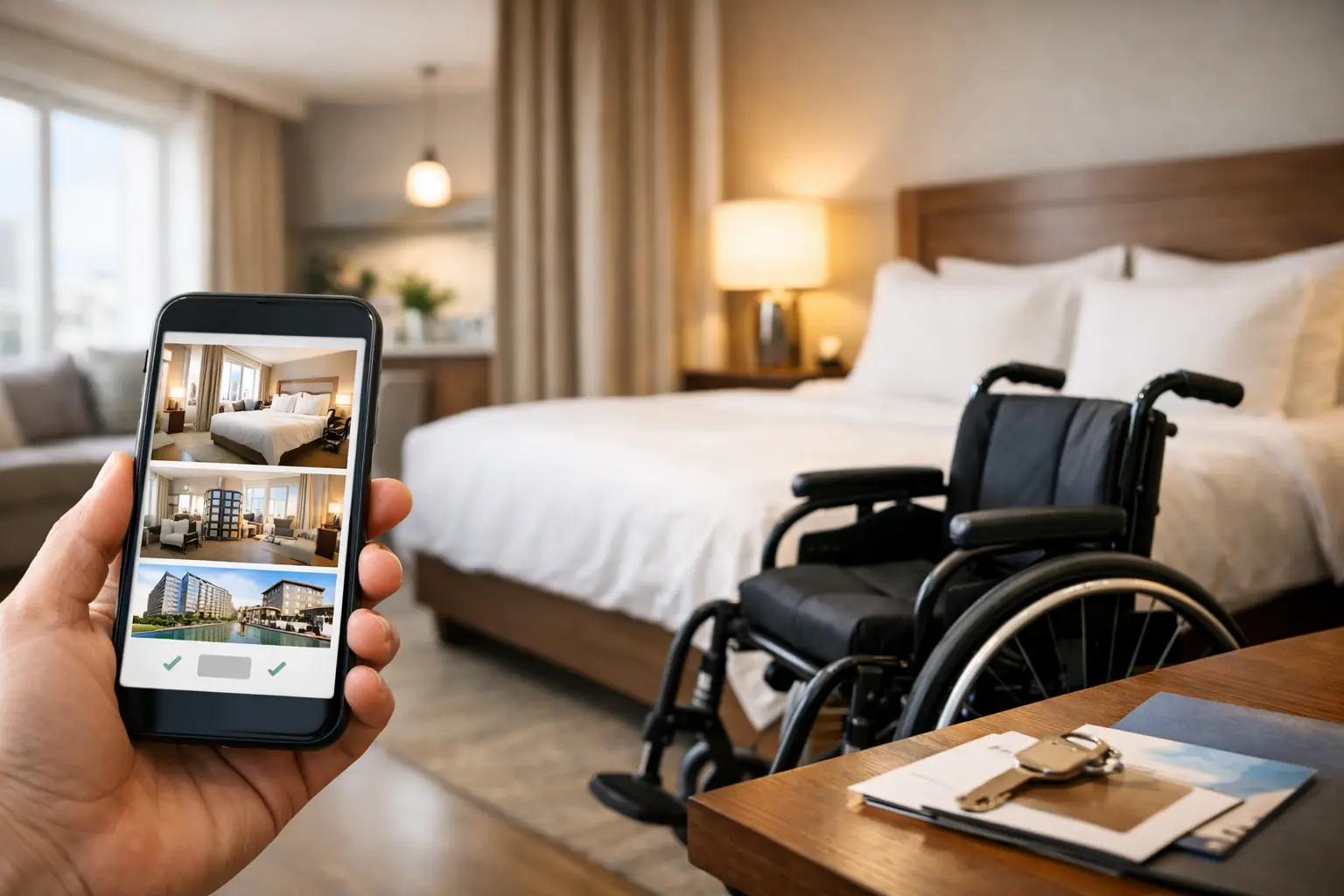
A booking page can say “accessible” and still leave you facing a step at reception, a bathroom door that will not close behind your wheelchair, or a lift too small for your scooter. An accessible flat or hotel stay should give you freedom to get in, wash, sleep, charge equipment and leave the building without turning every basic task into a negotiation.
The difference between a good stay and a stressful one is usually not the destination. It is the detail you checked before paying. Hotels and holiday flats are often marketed for disabled guests using broad labels, but those labels do not tell you whether the property works for your chair, scooter, transfer needs or support requirements.
Start with how you travel, not the accessibility badge
Before comparing properties, be clear about your own non-negotiables. A manual wheelchair user who can transfer independently may manage with a compact room and a small threshold. A powered wheelchair user or mobility scooter user may need wider turning circles, level entry, a larger lift and a safe place to charge overnight. If you travel with a hoist, shower chair, assistance dog or carer, the requirements change again.
Write down the measurements and practical needs that affect your stay. This includes the width and length of your wheelchair or scooter, the width of your own shower chair if you bring one, whether you need a roll-in shower, and whether you can safely transfer onto a standard-height bed. You do not need to make the list complicated. You need it to be honest.
A “ground-floor room” is not automatically step-free. An “adapted bathroom” may mean grab rails beside a bath rather than a level-access shower. And “near public transport” does not help much if the route from the station has steep hills, dropped kerbs missing or cobbles that shake a scooter to bits.
Hotel or flat: which works better?
There is no universal winner. The right choice depends on the length of the trip, how independently you travel and how much certainty the property can provide.
A hotel can be the easier option for a short break. There may be a staffed reception, a restaurant on site, daily housekeeping and somebody to contact quickly if a problem arises. Larger hotels are also more likely to have a proper accessible bedroom, lift and designated parking. The trade-off is that accessible rooms can be limited, layouts vary widely, and you may have less room for equipment, luggage and a travelling companion.
An accessible holiday flat can make a longer stay more comfortable. A kitchen means you are not reliant on restaurant opening hours or room service, and a separate living area can be useful when travelling with family or a carer. It can also feel more relaxed when you need space to dry equipment, manage medication or simply have a quiet evening.
However, flats demand closer scrutiny. A listing may show level access at the front door while failing to mention stairs to the balcony, a tight bathroom, a high bed or parking at the far end of a gravel drive. Private hosts are not always familiar with wheelchair access, so never rely on their idea of “easy access” without asking direct questions.
Questions to ask before an accessible flat or hotel stay
Do not be embarrassed about being specific. You are not being difficult. You are trying to avoid arriving somewhere that cannot meet the needs it claimed to meet.
Ask whether the route from the car park, pavement or taxi drop-off to your room is completely step-free. If there are steps, ask how many, whether there is a ramp, and the ramp gradient. Ask about door widths at the building entrance, bedroom and bathroom, not just the main front door.
For hotels, confirm the accessible room type is actually reserved against your booking. Do not accept a vague note saying “accessible room requested”. You want written confirmation that the allocated room has the features discussed. If the hotel has more than one adapted room, ask which room you will receive, on which floor, and whether the route to breakfast, the bar and accessible toilet is step-free.
For flats, ask for current photographs or a simple video walkthrough. Images should show the entrance, parking area, hall, bathroom, shower, bed and kitchen. This is much more useful than a polished wide-angle photo taken from a corner. A short video can reveal tight turns, lips at doorways and awkward floor changes that photographs hide.
Check the bathroom properly
The bathroom is where vague accessibility descriptions cause the most trouble. A roll-in shower should have level or near-level entry, enough room to position your chair, sensible drainage and grab rails placed where you need them. A fixed glass shower screen can make transfers impossible, even in a bathroom described as adapted.
Ask whether a shower chair is provided and what type it is. A wall-mounted fold-down seat is not suitable for everyone. If you need a portable chair, confirm there is enough space for it. Also ask about the toilet height, side transfer space, basin clearance and whether the bathroom door opens outwards. An inward-opening door can be a real problem if someone falls or needs assistance in a small room.
Do not overlook the bed and bedroom
A bed can be reachable but still unusable. Check its height, whether there is clear space on the side you transfer from, and whether the bed is fixed to the wall. If you use a hoist, ask about clearance underneath and around the bed. A room with a king-size bed may sound spacious, but the usable space disappears quickly if it is pushed into a corner.
Also confirm the route around the room. You need to reach the bed, wardrobe, window and bathroom without constantly reversing or moving furniture. For a mobility scooter, ask whether it can enter the room and where it can be parked without blocking the exit.
Charging, parking and getting out of the building
Mobility equipment needs planning just as much as your transport. Never assume you can charge a scooter in a corridor, stairwell or reception area. Fire safety rules may prevent it, and some hotels will not allow batteries to be charged in bedrooms. Ask where charging is permitted, whether there is a standard socket nearby, and whether the area is secure.
If you are driving, check that accessible parking is close to the entrance and not simply a blue badge space at the edge of a large car park. Find out whether it must be booked, whether there is a height barrier, and whether the surface is smooth enough for unloading a wheelchair or scooter. Gravel looks attractive in property photos but can be exhausting or impossible to cross.
Then look beyond the front door. Is there a reliable accessible taxi service locally? Is the nearest bus genuinely accessible? Can you reach shops, restaurants or the seafront without encountering a steep slope or a busy road with poor crossings? A well-adapted room is only half the job if the surrounding area traps you indoors.
Read reviews with a filter
Guest reviews are useful, but use them carefully. A review saying “fine for my elderly mother” may not mean it works for a powered wheelchair. Equally, one poor review may relate to a problem that does not affect you. Look for reviewers who mention door widths, wet rooms, lifts, parking, slopes and the exact mobility equipment they used.
Recent reviews matter most. A lift may be out of order, nearby building work may have changed the entrance route, or a property may have replaced furniture and reduced manoeuvring room. If the booking is important, contact the property even when the reviews look promising.
Build in a backup plan
Even careful planning cannot prevent every issue. Lifts fail, accessible rooms are mistakenly released, and airport delays can change arrival times. Keep the property’s direct telephone number saved, carry the measurements and details you discussed, and have a nearby accessible alternative in mind if your booking goes wrong.
It is also sensible to arrive during staffed hours where possible. Late self-check-in can be convenient, but it is not ideal if the key safe is too high, the entrance code does not work or the allocated parking space is blocked.
A good property will not be offended by these questions. It will answer clearly, check details rather than guess, and understand that access is not a preference. When you find somewhere that genuinely works, make a note of the room number, route in and useful local information. That knowledge makes the next trip easier - and gives you more energy for the part of travel that matters: getting out there on your own terms.
0 Comments
Leave a Comment