
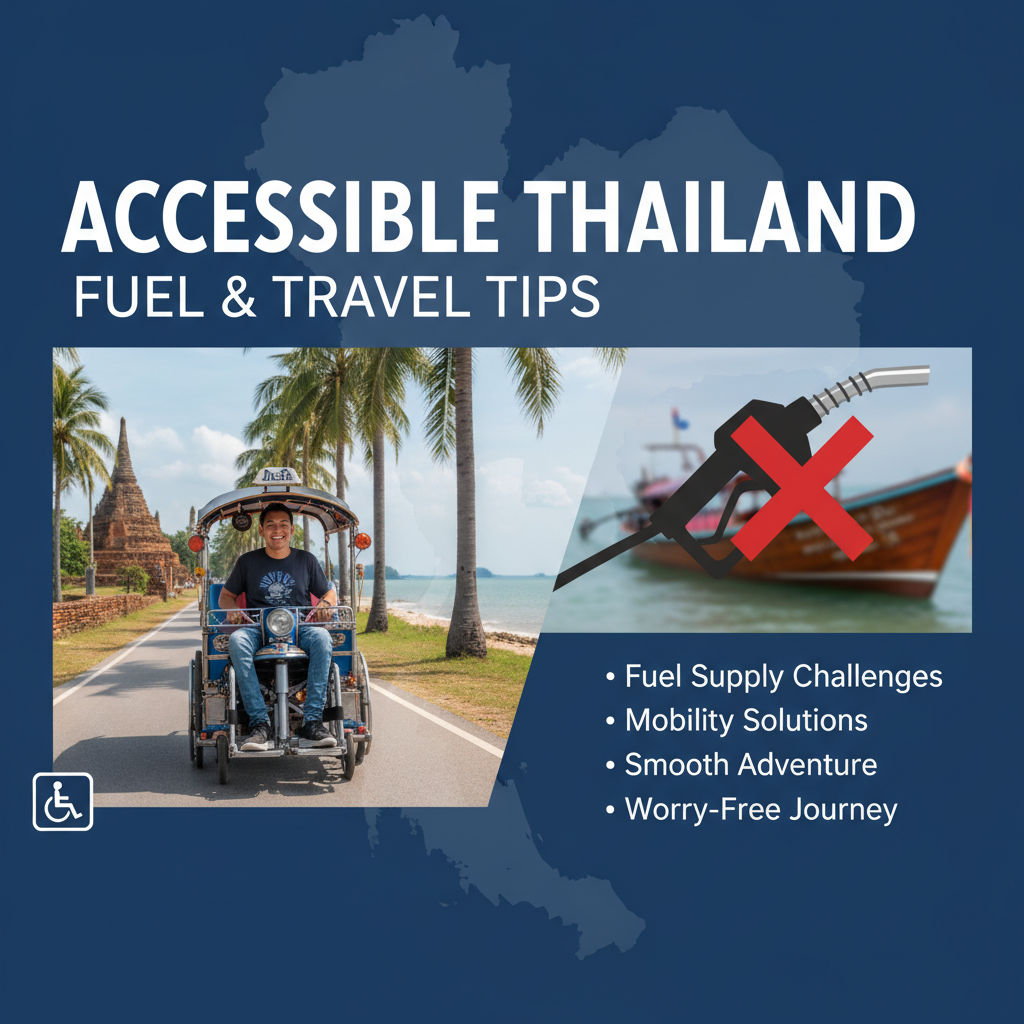
Thailand, a land of enchanting temples, vibrant markets, and stunning beaches, remains a dream destination for many. However, like any popular travel spot, it occasionally faces logistical challenges. Recent reports from the Association of Thai Travel Agents (ATTA) highlight a significant fuel supply bottleneck impacting tour operations and overland travel across the country.
As an accessible travel expert and a wheelchair user myself, I know how crucial reliable, pre-booked transport is for a stress-free and enjoyable holiday. This update is designed to give UK accessible travellers the practical insights needed to plan their Thai adventure with confidence, even amidst these temporary hurdles.
Understanding Thailand's Fuel Situation
The core issue stems from restricted fuel distribution and volatile prices. This means tour bus operators, including those specialising in accessible travel, are finding it difficult to calculate costs in advance. Many are resorting to defensive pricing, with some marking up bus fares by as much as 20% to create a buffer against operational uncertainties. While widespread cancellations aren't yet the norm, postponements and pending bookings are a growing concern, especially with critical travel periods like Songkran on the horizon.
What This Means for Accessible Travellers
For disabled travellers, who often rely on specific arrangements and accessible transport, these fuel fluctuations can introduce unique challenges:
- Uncertainty with Accessible Tours: Tour operators providing adapted vehicles and accessible routes depend heavily on reliable fuel supplies. Fluctuations can lead to last-minute surcharges or, in rare cases, itinerary adjustments.
- Overland Journey Concerns: If your accessible itinerary involves extensive travel between regions by bus or private accessible vehicle, there's a higher risk of delays or even issues finding fuel in more remote areas. This can be particularly stressful if you have timed connections or specific accessible accommodation bookings.
- Budgeting Surprises: The potential for a significant fuel surcharge on top of your existing booking could impact your carefully planned travel budget.
- Limited Alternatives: For many disabled travellers, simply 'hopping on a local bus or train' isn't a straightforward option if pre-arranged accessible transport falls through. Accessible taxis or vans might be harder to secure last-minute, especially in high demand.
Andy Wright Travel's Practical Advice for Your Accessible Thai Adventure
Don't let these challenges deter you from experiencing the magic of Thailand! With a little extra planning and awareness, your accessible journey can still be incredibly rewarding. Here’s my advice:
- Book with Reputable Accessible Specialists: Always choose tour operators known for their expertise in accessible travel in Thailand. They are more likely to have contingency plans, transparent pricing, and a deep understanding of your needs.
- Clarify Fuel Surcharges: Before finalising your booking, ask your operator directly about their policy on fuel price fluctuations. Understand if surcharges are possible, how they are communicated, and what the maximum potential increase might be.
- Confirm Cancellation & Refund Policies: Ensure you clearly understand the terms and conditions if a tour needs to be postponed or cancelled due due to unforeseen fuel-related issues.
- Consider Alternative Transport Options: For longer distances, investigate accessible domestic flights or train travel (checking accessibility in advance) as alternatives to long bus journeys, which might be less affected by local fuel station shortages.
- Stay Informed: Keep an eye on local news or consult your tour operator for the latest updates closer to your travel date. Your operator should be your primary source of real-time information.
- Build in Flexibility: If your itinerary allows, building a little extra buffer time between activities or destinations can help if minor adjustments are needed.
- Comprehensive Travel Insurance is Key: Always ensure you have robust travel insurance that covers trip disruptions, cancellations, and medical emergencies. Critically, ensure it covers pre-existing conditions and the value of your mobility aids.
- Focus on Hubs: Consider basing yourself in major cities like Bangkok, Chiang Mai, or Phuket, where fuel supplies are generally more robust and accessible transport options might be more varied, reducing the need for extensive overland travel.
Looking Ahead
The good news is that the Thai government and the tourism sector are actively working to address these issues. Proposals for stimulus budgets and proactive mitigation measures are being discussed to stabilise the situation. Thailand remains a stunning destination, and these challenges are being tackled head-on by the industry that values its visitors.
Keep Exploring, Keep Rolling!
While the current fuel situation adds a layer of planning, it shouldn't deter you from experiencing the vibrant culture, delicious food, and breathtaking landscapes of Thailand. With careful preparation, open communication with your accessible travel providers, and a little flexibility, your accessible Thai adventure can still be incredibly rewarding. Happy travels!